
Last Updated: June 17th, 2026 by Michael Schatz
Last Updated: May 26th, 2026 by Michael Schatz
Don't lose this article. Enter your email below, and I'll send it to you right now. Plus, we'll send you other unbelievable stories from baseball's past.
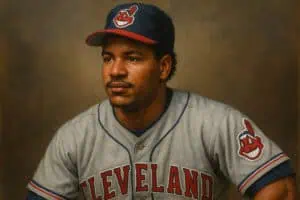
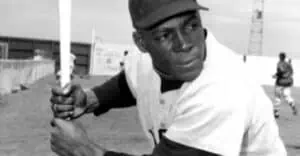
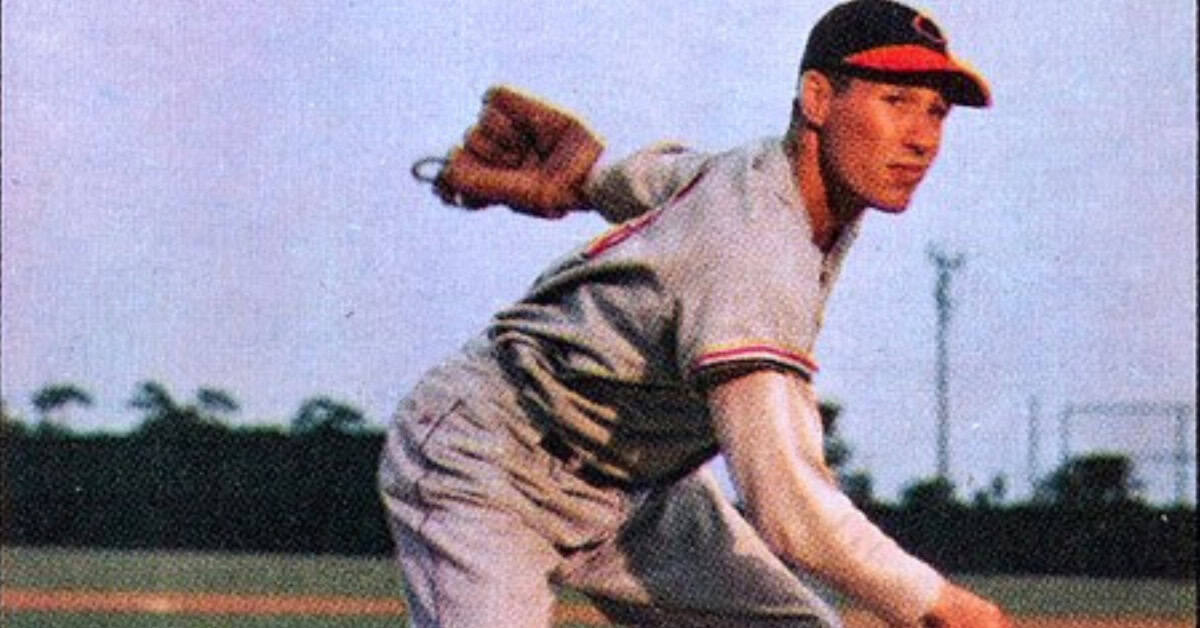
Cleveland baseball has always been a reflection of its city—tough, resilient, and capable of greatness when the moment demands it. From League Park to Municipal Stadium to Progressive Field, the franchise has showcased players who defined excellence across generations.
These twenty legends represent more than statistics and championships. They embody the spirit of a baseball town that has celebrated triumph, endured heartbreak, and never stopped believing in the power of the game to unite a community.
From the dead-ball era to today’s stars, these are the players who built Cleveland’s baseball legacy on the shores of Lake Erie.
We are counting down from #20 to #1, so the argument builds as the list gets closer to the top spot.
How We Made This List
The source explicitly presented these 20 players as a 20-to-1 editorial ranking, and we preserved that original order. It did not publish a mathematical formula. The order reflects accomplishments in Cleveland: peak performance, sustained production, longevity, championships and postseason impact, major awards, historical significance, and importance to the franchise. The cards show each player's full officially recognized major-league career totals and may include other clubs. Reasonable fans may weigh peak, longevity, team success, and historical impact differently.
20. Willis Hudlin: The Workhorse Who Never Complained
Before pitch counts and relief specialists, Willis Hudlin was an incredible workhorse for Cleveland. The Oklahoma native won 157 games for Cleveland from 1926 to 1940; his 158th career win came with Washington later in 1940, embodying the Depression-era work ethic that defined Cleveland baseball.
| Willis Hudlin — Career | Total |
|---|---|
| W | 158 |
| L | 156 |
| ERA | 4.42 |
| G | 491 |
| IP | 2613.1 |
| SO | 677 |
| WHIP | 1.48 |
| SV | 31 |
He pitched through pain, through losses, through whatever life threw at him—just like the city he represented. Hudlin’s durability made him a fixture on the mound during some of the franchise’s leanest years.
His consistency and reliability set a standard for Cleveland pitchers that lasted for decades. In an era when starting pitchers were expected to finish what they started, Hudlin delivered without complaint or fanfare.
19. Corey Kluber: The Ace Who Made Hitters Look Foolish
Two Cy Young Awards and a devastating slider that seemed to defy physics made Corey Kluber the ace of Cleveland’s modern renaissance. From 2014 to 2018, watching Kluber pitch was like watching a master craftsman at work—methodical, precise, and utterly dominant.
| Corey Kluber — Career | Total |
|---|---|
| W | 116 |
| L | 77 |
| ERA | 3.44 |
| G | 271 |
| IP | 1641.2 |
| SO | 1725 |
| WHIP | 1.13 |
| SV | 1 |
| Cy Young | 2 |
| All-Star selections | 3 |
His 18-strikeout performance against St. Louis in May 2015 reminded everyone why baseball can still be poetry in motion. Kluber’s ability to elevate his game in crucial moments made him the anchor of Cleveland’s rotation during their return to contention.
He carried the Indians deep into October multiple times, proving that elite pitching still wins championships. Kluber’s legacy is that of a cerebral artist who turned every start into a clinic on how to attack hitters.
18. George Uhle: Cleveland's Hometown Hero on the Mound
Born and raised in Cleveland, George Uhle pitched for his hometown team from 1919 to 1928. His league-leading 27 wins in 1926 epitomized the wild, high-scoring 1920s when pitchers threw complete games and hoped for the best.
| George Uhle — Career | Total |
|---|---|
| W | 200 |
| L | 166 |
| ERA | 4.00 |
| G | 513 |
| IP | 3119.2 |
| SO | 1135 |
| WHIP | 1.40 |
| SV | 25 |
| World Series titles | 1 |
Uhle was one of the premier pitchers of his era, a local star who shone brightly on the national stage. He combined excellent control with a competitive fire that made him a fan favorite at League Park.
His success as a hometown product gave Cleveland fans a special connection to their team. Uhle proved that local heroes could compete with anyone in baseball when given the opportunity.
17. Shoeless Joe Jackson: The Natural Before the Fall
Before the Black Sox scandal tainted his legacy, Shoeless Joe Jackson was pure magic in a Cleveland uniform from 1910 to 1915. His exceptional hitting in 1911 remains one of baseball’s most remarkable seasons, achieved with a swing so natural it seemed effortless.
| Joe Jackson — Career | Total |
|---|---|
| G | 1332 |
| AB | 4981 |
| H | 1772 |
| HR | 54 |
| RBI | 785 |
| SB | 202 |
| AVG | .356 |
| OBP | .423 |
| SLG | .517 |
| OPS | .940 |
| World Series titles | 1 |
Ty Cobb once said Jackson was the greatest natural hitter he ever saw—high praise from a man who wasn’t generous with compliments. Jackson’s time in Cleveland showcased his raw talent before controversy would forever complicate his story.
His departure to Chicago robbed Cleveland of one of the game’s most gifted players. What Jackson accomplished in Cleveland remains a testament to pure hitting ability untainted by the scandal that would come later.
16. Wes Ferrell: The Pitcher Who Could Also Hit Home Runs
In an era when pitchers were expected to be automatic outs, Wes Ferrell hit 38 home runs in his career—nine of them in 1931 alone. But he could pitch too, winning 20 games four times for Cleveland in the 1930s.
| Wes Ferrell — Career | Total |
|---|---|
| W | 193 |
| L | 128 |
| ERA | 4.04 |
| G | 374 |
| IP | 2623.0 |
| SO | 985 |
| WHIP | 1.48 |
| SV | 13 |
| All-Star selections | 2 |
Ferrell was baseball’s ultimate two-way threat decades before anyone coined the term. His combination of pitching excellence and hitting prowess made him one of the most unique players of his generation.
Watching Ferrell bat was a reminder that baseball’s specialization came at a cost. He proved that sometimes the most dangerous weapon is the one nobody expects.
15. Early Wynn: The Mean Right-Hander Who Owned the Plate (HOF)
Early Wynn once said he’d knock down his own grandmother if she dug in on him, and hitters believed every word. The intimidating right-hander won 163 games for Cleveland from 1949 to 1957, establishing himself as one of the most feared pitchers in baseball.
| Early Wynn — Career | Total |
|---|---|
| W | 300 |
| L | 244 |
| ERA | 3.54 |
| G | 691 |
| IP | 4564.0 |
| SO | 2334 |
| WHIP | 1.33 |
| SV | 15 |
Wynn’s philosophy was simple: the plate belonged to him, and anyone who disagreed would find themselves picking dirt out of their uniform. His combination of talent and intimidation made him nearly unhittable during his Cleveland prime.
He later won the Cy Young Award with the White Sox, but his best years came in Cleveland. Wynn represented an era when pitchers weren’t afraid to pitch inside and hitters knew the consequences of crowding the plate.
14. Sam McDowell: Sudden Sam and His Blazing Fastball
Before radar guns, Sam McDowell’s fastball was measured in the fear it struck in hitters’ hearts. Sudden Sam led the American League in strikeouts five times, including 325 in 1965—a total that would make modern pitchers weep.
| Sam McDowell — Career | Total |
|---|---|
| W | 141 |
| L | 134 |
| ERA | 3.17 |
| G | 425 |
| IP | 2492.1 |
| SO | 2453 |
| WHIP | 1.31 |
| SV | 14 |
| All-Star selections | 6 |
His left arm was a cannon, his control was questionable, and watching him pitch was like watching controlled chaos unfold in real time. When McDowell was on, he was virtually unhittable.
His strikeout dominance in the 1960s established him as one of the most overpowering pitchers of his generation. McDowell’s raw talent was undeniable, even if consistency sometimes eluded him.
13. Albert Belle: The Intimidating Slugger Who Terrorized Pitchers
Albert Belle turned batting practice into a demolition derby, routinely launching balls into the upper deck with a swing that looked effortless but packed the power of a wrecking ball. His 50 home runs and 52 doubles in 1995 made him the first player to reach both milestones in the same season.
| Albert Belle — Career | Total |
|---|---|
| G | 1539 |
| AB | 5853 |
| H | 1726 |
| HR | 381 |
| RBI | 1239 |
| SB | 88 |
| AVG | .295 |
| OBP | .369 |
| SLG | .564 |
| OPS | .933 |
| All-Star selections | 5 |
| Silver Sluggers | 5 |
Belle played with a fury that matched Cleveland’s blue-collar soul—intense, uncompromising, and utterly devastating. Pitchers feared him, and with good reason.
His production during Cleveland’s 1990s resurgence was instrumental in returning the franchise to relevance. Belle’s combination of power and intimidation made him one of the most feared hitters of his era.
12. Mel Harder: The Iron Man Who Pitched Through Three Decades
From 1928 to 1947, Mel Harder was Cleveland’s constant—a right-handed anchor who won 223 games while watching the world change around him. He pitched through the Depression, World War II, and baseball’s integration, adapting his style to survive in three different decades.
| Mel Harder — Career | Total |
|---|---|
| W | 223 |
| L | 186 |
| ERA | 3.80 |
| G | 582 |
| IP | 3426.1 |
| SO | 1161 |
| WHIP | 1.41 |
| SV | 23 |
| All-Star selections | 4 |
Harder proved that longevity requires more than talent; it demands intelligence, adaptability, and an unshakeable work ethic. His ability to remain effective across such a long career speaks to his baseball intelligence.
He later became one of baseball’s most respected pitching coaches, passing his knowledge to future generations. Harder’s two decades in Cleveland made him one of the franchise’s most enduring figures.
11. Addie Joss: The Perfect Game Artist with the Golden Arm (HOF)
Addie Joss threw a perfect game on October 2, 1908, in a pennant race pressure cooker against the White Sox, needing just 74 pitches. His career 1.89 ERA remains the second-lowest in baseball history, a testament to pinpoint control and ice-cold nerves.
| Addie Joss — Career | Total |
|---|---|
| W | 160 |
| L | 97 |
| ERA | 1.89 |
| G | 286 |
| IP | 2327.0 |
| SO | 920 |
| WHIP | 0.97 |
| SV | 5 |
Joss died tragically young at 31, but his nine seasons in Cleveland were pure artistry—every pitch painted with the precision of a master craftsman. His control was legendary, his composure unshakeable.
The brevity of his career makes his statistical dominance even more remarkable. Joss packed a Hall of Fame career into less than a decade, leaving Cleveland fans wondering what might have been.
10. Jose Ramirez: The Switch-Hitting Magician Still Making Magic
In an era of specialization, Jose Ramirez does everything—switch-hits for power, steals bases, turns double plays, and plays with the joy of a kid who still can’t believe he gets paid to play baseball. His 2018 season, where he blasted 39 home runs and swiped 34 bases, placed him in elite company.
| José Ramírez — Career | Total |
|---|---|
| G | 1696 |
| AB | 6290 |
| H | 1744 |
| HR | 295 |
| RBI | 985 |
| SB | 316 |
| AVG | .277 |
| OBP | .352 |
| SLG | .498 |
| OPS | .850 |
| All-Star selections | 7 |
| Silver Sluggers | 6 |
Watching Ramirez play is a reminder of why we fell in love with baseball in the first place. His infectious enthusiasm and all-around excellence have made him the face of modern Cleveland baseball.
As his career continues, Ramirez is building a resume that could land him in Cooperstown. His combination of production and personality has endeared him to Cleveland fans like few players before him.
9. Joe Sewell: The Man Who Almost Never Struck Out (HOF)
Joe Sewell struck out just 114 times in over 7,000 career at-bats—a rate so impossibly low it seems like a typo. The Alabama native replaced Ray Chapman after the tragic beaning incident and went on to hit over .300 across 11 seasons in Cleveland.
| Joe Sewell — Career | Total |
|---|---|
| G | 1903 |
| AB | 7132 |
| H | 2226 |
| HR | 49 |
| RBI | 1055 |
| SB | 74 |
| AVG | .312 |
| OBP | .391 |
| SLG | .413 |
| OPS | .804 |
| World Series titles | 2 |
In an era when strikeouts were shameful, Sewell elevated contact hitting to an art form. His bat control was supernatural, his ability to put the ball in play unmatched in baseball history.
Sewell proved that sometimes the most revolutionary act is simply putting the ball in play. His consistency and reliability made him one of the most valuable players of the 1920s.
8. Jim Thome: The Gentle Giant Who Crushed Baseballs (HOF)
Jim Thome’s 337 home runs in a Cleveland uniform tell only part of the story—the gentle giant from Peoria also tipped his cap to opposing fans after milestone homers and never forgot where he came from. His 52 home runs in 2002 set a franchise record that still stands.
| Jim Thome — Career | Total |
|---|---|
| G | 2543 |
| AB | 8422 |
| H | 2328 |
| HR | 612 |
| RBI | 1699 |
| SB | 19 |
| AVG | .276 |
| OBP | .402 |
| SLG | .554 |
| OPS | .956 |
| All-Star selections | 5 |
| Silver Sluggers | 1 |
Thome proved that you could be feared at the plate and loved everywhere else. His kindness to fans and teammates made him beloved beyond statistics, a rare combination of power and humility.
His departure from Cleveland broke hearts, but his legacy as one of the franchise’s greatest sluggers remains secure. Thome embodied everything Cleveland fans wanted in a superstar—production, loyalty, and class.
7. Bob Lemon: From Third Base to Cooperstown via the Mound (HOF)
Bob Lemon began his career as a third baseman but found immortality on the pitcher’s mound, winning 207 games for Cleveland and two crucial victories in the 1948 World Series. His transition from position player to ace pitcher was seamless, proving that sometimes the best career moves are the ones nobody sees coming.
| Bob Lemon — Career | Total |
|---|---|
| W | 207 |
| L | 128 |
| ERA | 3.23 |
| G | 460 |
| IP | 2850.0 |
| SO | 1277 |
| WHIP | 1.34 |
| SV | 22 |
| All-Star selections | 7 |
| World Series titles | 1 |
Lemon’s adaptability embodied the Cleveland spirit—when one door closes, you find another way to excel. His success as a converted pitcher inspired generations of players to embrace position changes.
He became one of the most dominant pitchers of the 1950s, earning a plaque in Cooperstown. Lemon’s willingness to reinvent himself made him a Cleveland legend and a baseball immortal.
6. Kenny Lofton: The Center Field Gazelle Who Stole Everything
Kenny Lofton stole 452 bases in a Cleveland uniform, but his greatest theft was turning routine fly balls into spectacular catches with a grace that made center field look easy. The former basketball player brought court vision to the outfield, anticipating where balls would land before they left the bat.
| Kenny Lofton — Career | Total |
|---|---|
| G | 2103 |
| AB | 8120 |
| H | 2428 |
| HR | 130 |
| RBI | 781 |
| SB | 622 |
| AVG | .299 |
| OBP | .372 |
| SLG | .423 |
| OPS | .795 |
| All-Star selections | 6 |
| Gold Gloves | 4 |
Watching Lofton patrol center field was like watching poetry in motion—fluid, effortless, and utterly mesmerizing. His speed changed games in ways that don’t always show up in box scores.
Lofton was the catalyst for Cleveland’s 1990s resurgence, setting the table for the sluggers behind him. His combination of speed, defense, and leadoff hitting made him indispensable to those great Cleveland teams.
5. Earl Averill: The Pacific Coast Star Who Conquered Cleveland (HOF)
Earl Averill arrived from the Pacific Coast League in 1929 and immediately homered in his first at-bat—a fitting introduction to a career that included six All-Star selections and a lifetime average over .300. The Washington native brought West Coast style to Midwest sensibilities.
| Earl Averill Sr. — Career | Total |
|---|---|
| G | 1669 |
| AB | 6353 |
| H | 2019 |
| HR | 238 |
| RBI | 1164 |
| SB | 70 |
| AVG | .318 |
| OBP | .395 |
| SLG | .534 |
| OPS | .929 |
| All-Star selections | 6 |
His line drives had the crack of authority, announcing that another star had found his home in Cleveland. Averill’s consistent excellence throughout the 1930s made him one of the American League’s premier outfielders.
He proved that talent transcends geography, becoming a Cleveland icon despite his West Coast roots. Averill’s election to Cooperstown validated what Cleveland fans had known all along—he was one of the greats.
4. Stan Coveleski: The Spitball Master of the 1920 Champions (HOF)
Stan Coveleski’s spitball danced and darted like a butterfly with a death wish, helping Cleveland capture its first World Series championship in 1920. The Pennsylvania coal miner’s son won three complete games in that Fall Classic, outdueling Brooklyn’s best with a pitch that was legal then but would be scandalous now.
| Stan Coveleski — Career | Total |
|---|---|
| W | 215 |
| L | 142 |
| ERA | 2.89 |
| G | 450 |
| IP | 3082.0 |
| SO | 981 |
| WHIP | 1.25 |
| SV | 21 |
| World Series titles | 1 |
Coveleski represented an era when pitchers were craftsmen who painted corners with saliva and determination. His mastery of the spitball made him nearly unhittable during Cleveland’s championship run.
He won over 170 games for Cleveland and earned a place in Cooperstown. Coveleski’s 1920 World Series performance remains one of the greatest pitching exhibitions in Cleveland history.
3. Lou Boudreau: The Boy Manager Who Led Cleveland to Glory (HOF)
At 24, Lou Boudreau became player-manager of the Cleveland Indians, a decision that seemed insane until he led them to the 1948 World Series championship while hitting .355 and winning AL MVP honors. The Boy Manager revolutionized shortstop play with his positioning and leadership.
| Lou Boudreau — Career | Total |
|---|---|
| G | 1646 |
| AB | 6029 |
| H | 1779 |
| HR | 68 |
| RBI | 789 |
| SB | 51 |
| AVG | .295 |
| OBP | .380 |
| SLG | .415 |
| OPS | .795 |
Boudreau proved that sometimes the best leaders are those who lead by example. His playoff victory over Boston remains one of baseball’s greatest individual performances under pressure, as he went four-for-four to clinch the pennant.
His innovative defensive shifts and tactical brilliance changed how baseball was played. Boudreau’s 1948 season was the perfect marriage of individual excellence and team success, cementing his place as a Cleveland immortal.
2. Larry Doby: The Man Who Broke the American League Color Barrier (HOF)
Eleven weeks after Jackie Robinson broke baseball’s color barrier in Brooklyn, Larry Doby did the same in the American League, enduring the same hatred with equal dignity and grace. The South Carolina native became a seven-time All-Star and led the AL in home runs twice while helping Cleveland win the 1948 World Series.
| Larry Doby — Career | Total |
|---|---|
| G | 1674 |
| AB | 5883 |
| H | 1697 |
| HR | 273 |
| RBI | 1093 |
| SB | 64 |
| AVG | .288 |
| OBP | .389 |
| SLG | .499 |
| OPS | .888 |
| All-Star selections | 7 |
| World Series titles | 1 |
Doby’s courage in the face of racism changed baseball and America. His excellence on the field and dignity off it paved the way for generations of Black players in the American League.
He hit 215 home runs for Cleveland and earned a place in Cooperstown. Doby’s legacy transcends statistics—he was a pioneer who changed the game forever while excelling at the highest level.
1. Bob Feller: Rapid Robert Who Put Cleveland on the Map (HOF)
Bob Feller’s fastball was measured at 98.6 mph as it crossed the plate in a 1946 U.S. Army test, a result later estimated at 107.6 mph at release. The extraordinary velocity made him baseball’s first true power pitcher and Cleveland’s greatest legend. The Iowa farm boy threw three no-hitters and won 266 games despite losing nearly four seasons to military service during World War II.
| Bob Feller — Career | Total |
|---|---|
| W | 266 |
| L | 162 |
| ERA | 3.25 |
| G | 570 |
| IP | 3827.0 |
| SO | 2581 |
| WHIP | 1.32 |
| SV | 21 |
| All-Star selections | 8 |
| World Series titles | 1 |
Feller put Cleveland baseball on the national map, drawing crowds wherever he pitched and establishing the Indians as a premier franchise. His combination of blazing speed and competitive fire made him the most dominant pitcher of his generation.
He sacrificed his prime years to serve his country, then returned to dominate again—a testament to both his talent and character. Feller wasn’t just Cleveland’s greatest player; he was the face of the franchise for decades, embodying everything the city valued: talent, toughness, and unwavering loyalty.
Final Thoughts
These twenty legends represent the full sweep of Cleveland baseball history, from the dead-ball era through integration and into the modern game. They wore different uniforms and played under different rules, but they all shared one thing: an unwavering commitment to excellence that defined Cleveland baseball.
From Feller’s fastball to Ramirez’s smile, from Doby’s courage to Boudreau’s leadership, these players gave Cleveland fans memories that transcend wins and losses. They proved that greatness isn’t just about statistics—it’s about the moments that make us remember why we love this game and this team.