
Last Updated: June 17th, 2026 by Michael Schatz
Before fantasy leagues and billion-dollar contracts, baseball gave us moments that stopped time itself. These weren’t just games—they were shared heartbeats of a nation, crackling through radio speakers and flickering on black-and-white TVs in living rooms across America.
Don't lose this article. Enter your email below, and I'll send it to you right now. Plus, we'll send you other unbelievable stories from baseball's past.
Babe Ruth’s Called Shot in the 1932 World Series

October 1, 1932, Wrigley Field. The Sultan of Swat stepped into the batter’s box amid a chorus of boos and allegedly pointed toward the center field bleachers. Two pitches later, he launched Charlie Root’s offering exactly where his finger had aimed. Whether he actually called it remains baseball’s greatest mystery, but the legend was born in that moment when swagger met destiny. The crowd fell silent as the Bambino rounded the bases with that familiar pigeon-toed trot, having just authored the most audacious moment in World Series history.
Lou Gehrig’s “Luckiest Man” Farewell Speech
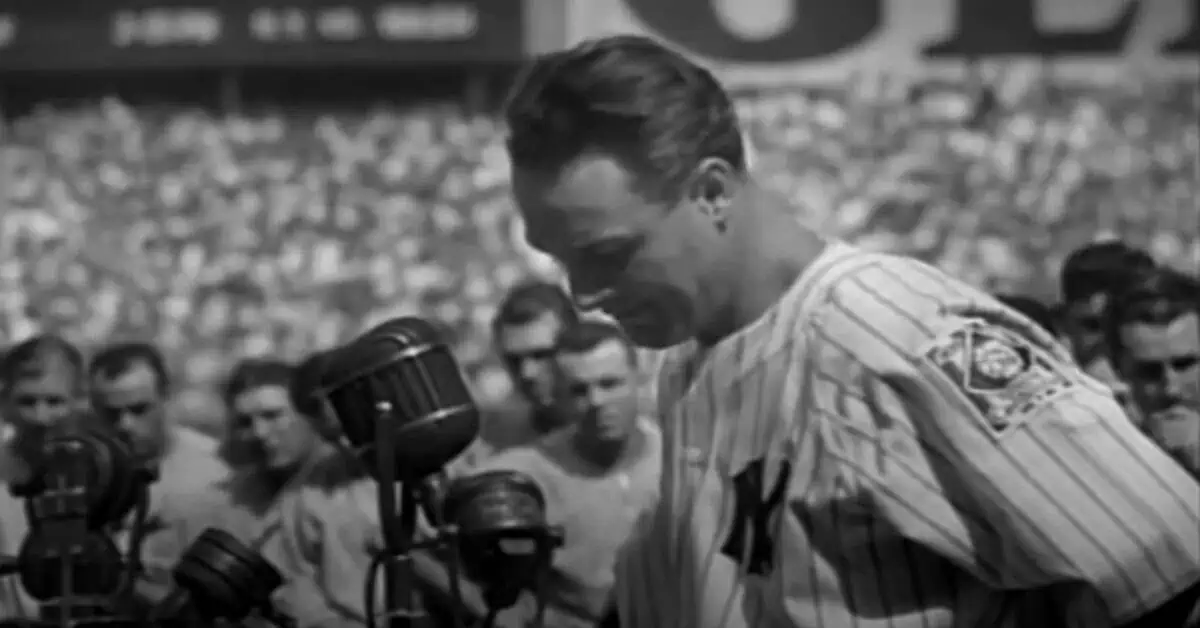
July 4, 1939, Yankee Stadium. The Iron Horse stood at home plate, his voice echoing through the cathedral of baseball as 61,808 fans hung on every word. Diagnosed with ALS just weeks earlier, Gehrig somehow found the strength to call himself “the luckiest man on the face of the earth.” His words cracked like a bat against a fastball, each syllable heavy with grace and gratitude. Handkerchiefs dabbed at eyes throughout the stands as America witnessed true courage in pinstripes, a moment so pure it transcended sport and became a lesson in how to face the unfaceable with dignity.
Bobby Thomson’s “Shot Heard ‘Round the World”

October 3, 1951, Polo Grounds. Ralph Branca’s fastball hung in the autumn air for what seemed like eternity before Bobby Thomson’s bat sent it screaming into the left field stands. Russ Hodges’ voice cracked the airwaves: “The Giants win the pennant! The Giants win the pennant!” repeated in pure ecstasy as grown men wept and danced in the streets of Manhattan. The Dodgers had blown a 13½-game lead, and Thomson’s three-run homer completed the greatest comeback in baseball history. In that instant, the Scottish-born outfielder became forever frozen in time, his arms raised in triumph as he rounded first base into immortality.
Don Larsen’s Perfect Game in the World Series
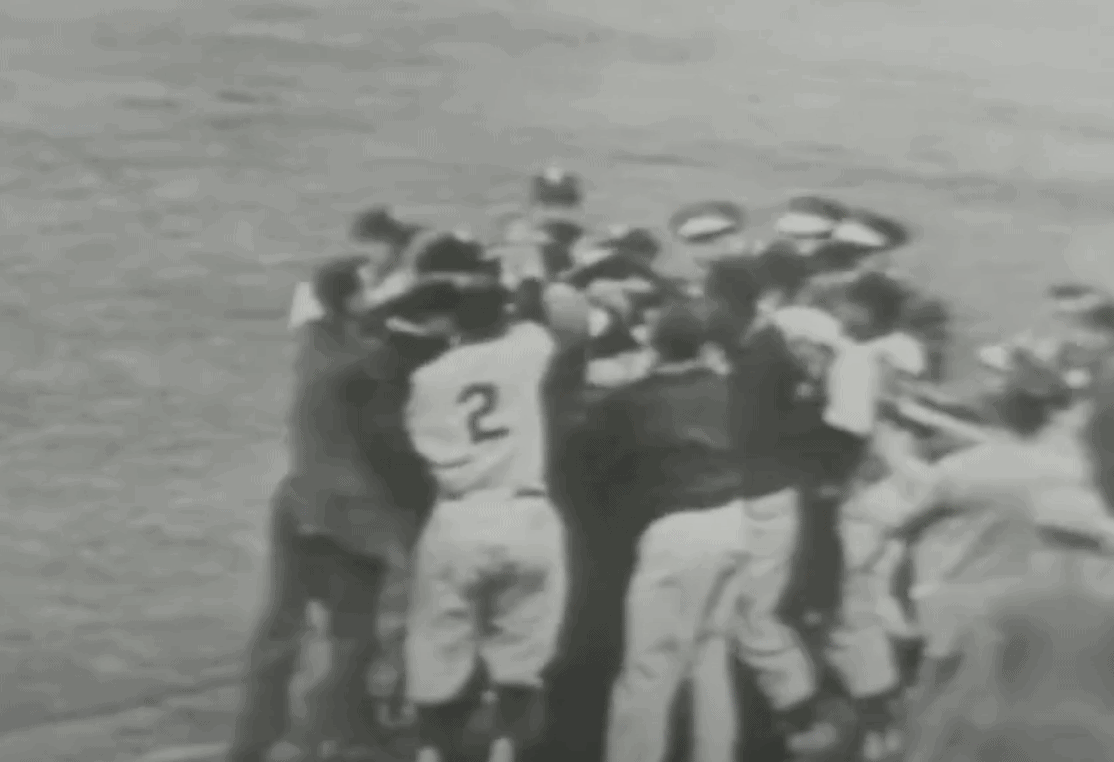
October 8, 1956, Yankee Stadium. Don Larsen, a journeyman pitcher with an 81-91 career record, somehow summoned perfection when it mattered most. Twenty-seven Dodgers came to the plate, and twenty-seven went down in order as Yankee Stadium held its collective breath. Yogi Berra’s leap into Larsen’s arms after Dale Mitchell looked at strike three became the photograph that defined World Series magic. The no-windup delivery that had seemed so quirky suddenly looked like poetry in motion, and a man who’d never thrown a no-hitter in the regular season had just authored the only perfect game in World Series history.
Hank Aaron Breaks Babe Ruth’s Home Run Record
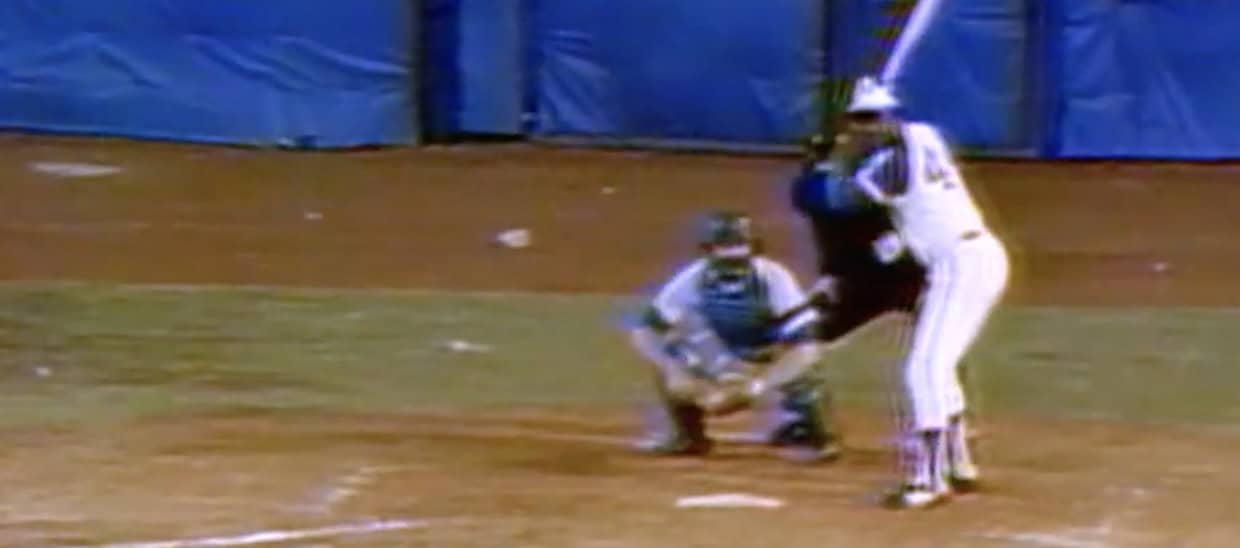
April 8, 1974, Atlanta-Fulton County Stadium. Hammerin’ Hank’s swing sent Al Downing’s slider sailing over the left field fence, and with it, decades of death threats and racial hatred melted into pure jubilation. Home run number 715 didn’t just break Babe Ruth’s record—it shattered barriers and proved that grace under pressure could triumph over America’s ugliest impulses. As Aaron rounded the bases with quiet dignity, two college students sprinted onto the field to congratulate him, their spontaneous celebration capturing a nation’s relief and pride. The man who had endured hate mail by the bagful had just authored one of the most significant moments in sports history, proving that true champions are measured not just by their statistics, but by their character.
Carlton Fisk Waves His Home Run Fair in Game 6
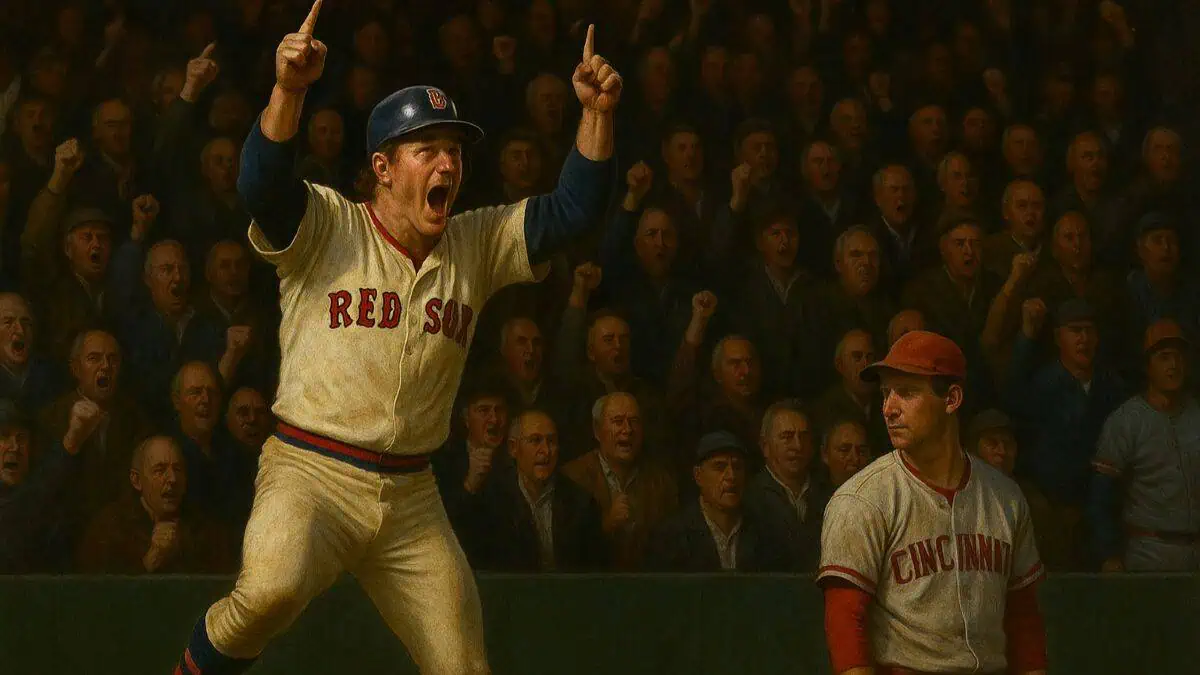
October 21, 1975, Fenway Park. Carlton Fisk’s body English became the most famous dance in baseball history as he waved his arms frantically, willing his 12th-inning drive to stay fair down the left field line. The ball caromed off the foul pole with a metallic clang that echoed through New England’s soul, and Pudge began his joyous hop around the bases at 12:34 AM. NBC’s camera operator, distracted by a rat in the Green Monster scoreboard, accidentally created the perfect shot by staying on Fisk instead of following the ball. That serendipitous moment gave us the most replayed home run trot in history, a pure expression of hope and will that embodied everything magical about October baseball.
Kirk Gibson’s Impossible World Series Home Run
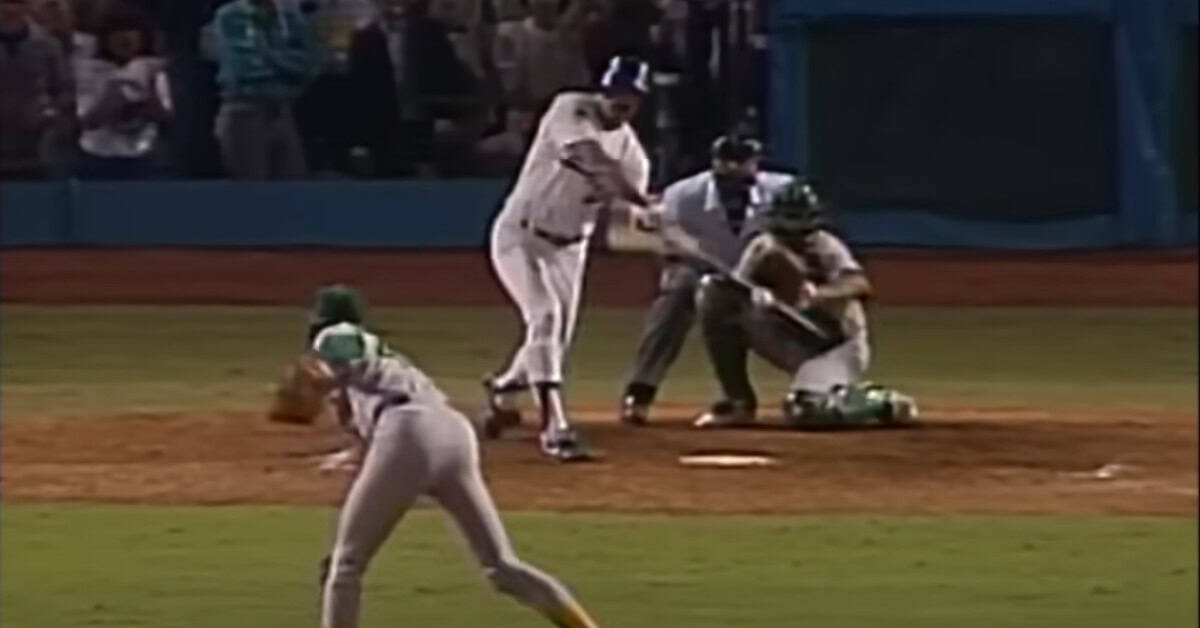
October 15, 1988, Dodger Stadium. Kirk Gibson limped to the plate like a wounded warrior, his legs barely able to carry him after injuring both knees and pulling his hamstring. Dennis Eckersley’s backdoor slider hung just long enough for Gibson to golf it into the right field pavilion, sending Dodger Stadium into delirium. Jack Buck’s call—”I don’t believe what I just saw!”—perfectly captured the impossibility of the moment as Gibson pumped his fist around the bases, his pain forgotten in pure adrenaline. The man who could barely walk had just authored the most clutch hit in World Series history, proving that sometimes the most significant moments require the biggest hearts, not the healthiest bodies.
Joe Carter’s World Series Walk-Off Home Run

October 23, 1993, SkyDome. Mitch Williams’ 2-2 slider stayed up in the zone just long enough for Joe Carter to turn it into Canadian history. The three-run homer sailed into the left field seats, and Carter began his euphoric skip around the bases, pumping his fist as 52,195 fans erupted in the kind of noise that rattles your ribcage. Tom Cheek’s call—”Touch ’em all, Joe!”—became the soundtrack to Toronto’s second consecutive World Series championship, and Carter’s leap onto home plate was pure joy incarnate. Only the second World Series to end on a walk-off home run, it capped a dramatic finish in Fall Classic history and turned a kid from Oklahoma into a Canadian folk hero forever.
Cal Ripken Jr. Breaks Lou Gehrig’s Consecutive Games Record

September 6, 1995, Oriole Park at Camden Yards. When the numbers changed from 2130 to 2131 on the warehouse wall, Cal Ripken Jr. had officially broken the unbreakable record, and baseball found its soul again after the devastating 1994 strike. The 22-minute standing ovation felt like America exhaling, celebrating a man who simply showed up to work every single day for 13 years straight. Ripken’s impromptu victory lap around Camden Yards, shaking hands with fans and teammates alike, became a symbol of perseverance and dedication in an era when both seemed in short supply. The Iron Man had restored faith in the game by proving that sometimes the greatest achievement is simply refusing to quit.
Derek Jeter’s Mr. November Walk-Off Home Run

November 1, 2001, Yankee Stadium. Just seven weeks after 9/11, Derek Jeter’s 10th-inning home run off Byung-Hyun Kim sent Yankee Stadium into a cathartic frenzy that felt like more than just baseball. The Captain’s swing at 12:04 AM made him “Mr. November,” but more importantly, it gave a wounded city something to celebrate when celebration seemed impossible. As Jeter rounded the bases with his arms raised, 56,018 fans forgot their fears for a moment and remembered what it felt like to feel pure joy again. The walk-off homer tied the World Series and proved that sometimes sports can provide exactly the healing a nation needs, one swing at a time.