

Last Updated: June 17th, 2026 by Matthew Brown
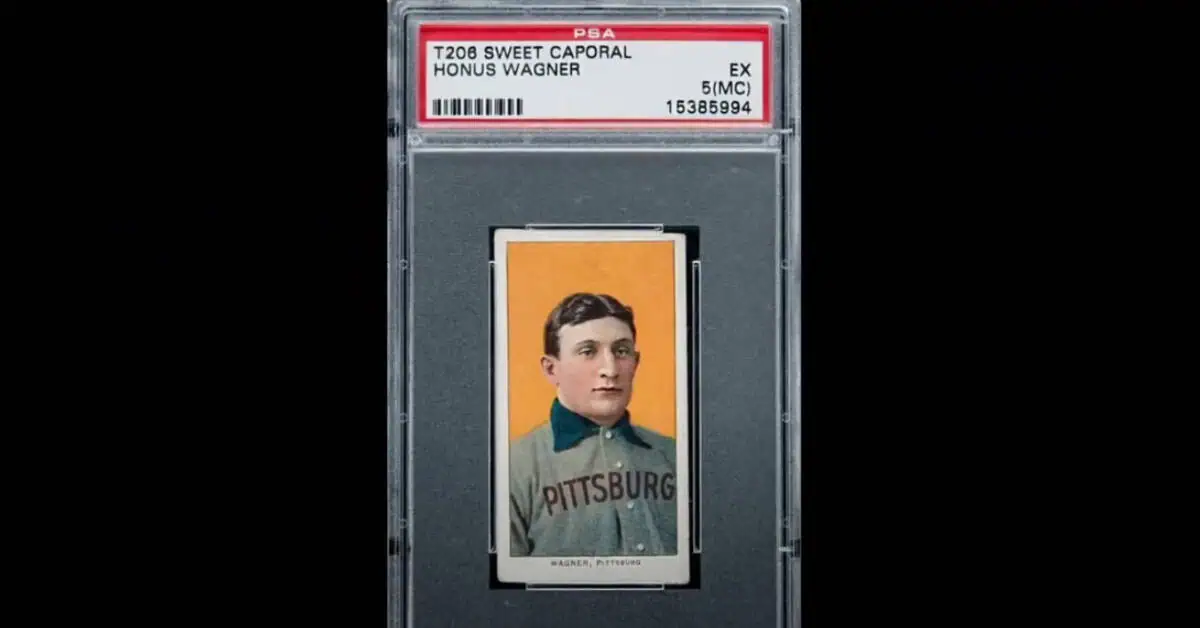
In August 2022, a small piece of cardboard sold for $7.25 million. Not cryptocurrency. Not a tech stock. A baseball card. But the T206 Honus Wagner isn’t just any baseball card – it’s the specimen that transformed sports collecting from a kids’ hobby into a serious investment market.
Don't lose this article. Enter your email below, and I'll send it to you right now. Plus, we'll send you other unbelievable stories from baseball's past.
According to ESPN, this particular Wagner card was graded just 2 out of 10 by SGC, making its record-breaking price even more remarkable. Think about that: a heavily worn card still commanded more money than pristine examples of virtually any other sports collectible.
But to understand how we got here, we need to go back to 1909, when the Baseball Hall of Fame tells us the American Tobacco Company made a crucial mistake: they didn’t get Wagner’s proper permission before printing his card.
What happened next changed collecting forever.
Honus Makes His Stand
Wagner’s objection to the card’s production – whether due to overcompensation or principles – created artificial scarcity decades before that term entered the investment lexicon. Only 50-60 copies exist today, making this card rarer than some Picassos.
But rarity alone doesn’t explain the Wagner card’s impact. As noted by Ripped, this card has repeatedly shattered its own price records, from $1.27 million in 2000 to its current $7.25 million valuation. Each sale established new benchmarks for what collectors would pay for the right piece of cardboard.
The Wagner card did something even more important: it created the template for how we value sports memorabilia. Before the T206 Wagner, baseball cards were worth pennies. After it, they became blue-chip investments.
This transformation didn’t happen overnight. The card’s value grew slowly at first, reaching $50 in the 1930s – an astronomical sum for a baseball card at the time. Each subsequent sale pushed the ceiling higher, teaching collectors to view cards as serious assets.
Think of the Wagner as the first “grail card.” Its combination of rarity, player prestige, and mysterious origin story created the blueprint that every valuable card has followed since, from the 1952 Topps Mickey Mantle to the 2009 Bowman Chrome Mike Trout.
The Industry It Created
The card’s influence extends beyond just prices. It helped establish the grading industry, as collectors needed reliable authentication for items commanding such huge sums. Every PSA or SGC slab today owes something to the T206 Wagner’s legacy.
Modern card collecting’s focus on condition and provenance? That started with the Wagner card. The practice of tracking card populations and rarity? Wagner again. Even the idea that cards could be legitimate investment vehicles began with this one piece of tobacco-company cardboard.
The T206 Wagner’s impact on collecting culture can’t be overstated. It’s the card that proved sports memorabilia could be more valuable than precious metals or fine art. Every six-figure card sale today stands on its shoulders.
What’s particularly fascinating is how the card’s value has become self-reinforcing. As the Baseball Hall of Fame notes, “The card is valuable because it is famous; it is famous because it is valuable.” It’s the ultimate example of how perception creates reality in collecting.
Impact On Today
The modern sports card boom, with its billion-dollar annual sales and investment-fund backing, exists because the Wagner card first proved such valuations were possible. It walked so modern cards could run.
Today’s collectors obsess over print runs, variations, and parallels – all concepts that echo the Wagner card’s original scarcity. Every “chase card” or short print is trying to recreate the Wagner card’s magic formula.
The $7.25 million sale isn’t just a record – it’s validation of the entire sports collecting industry that the Wagner card helped create. In refusing to appear on a simple tobacco card, Honus Wagner accidentally wrote the rules for a market that would emerge decades after his death.
That’s the real legacy of the T206 Wagner: it didn’t just set records, it created the conditions that make those records possible. Every valuable sports card today isn’t just competing with the T206 Wagner – it’s following its lead.