

Last Updated: June 17th, 2026 by Michael Griffin

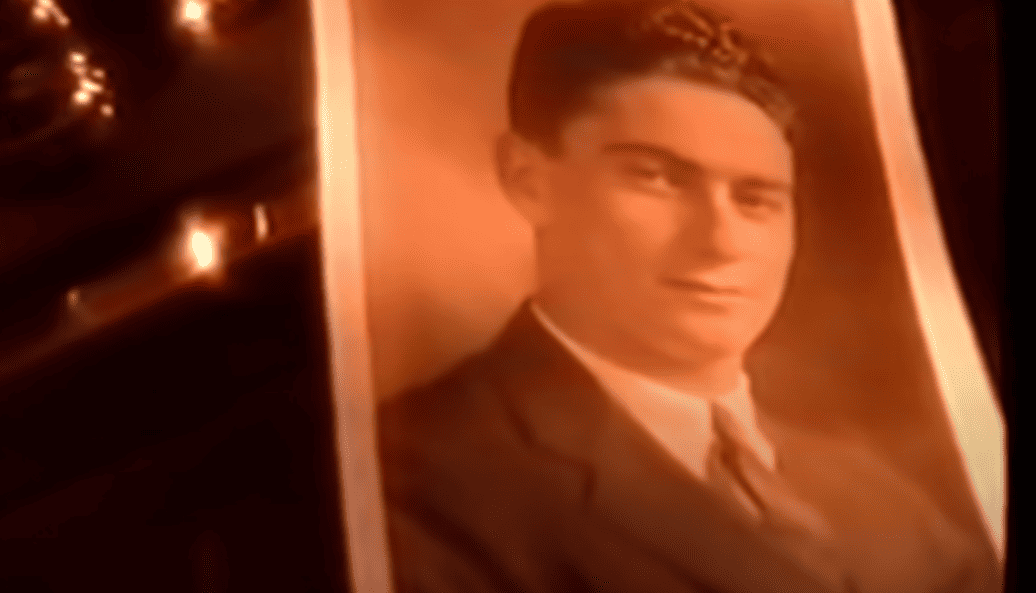
They called him “the brainiest man in baseball.” But that was like calling James Bond “the best-dressed accountant in London.”
Don't lose this article. Enter your email below, and I'll send it to you right now. Plus, we'll send you other unbelievable stories from baseball's past.
Moe Berg’s .243 batting average made him forgettable. And that’s exactly what made him perfect.
Using the Bambino for Cover
While Babe Ruth was launching home runs in Tokyo during MLB’s 1934 All-Star tour, Berg was launching something far more important – a covert intelligence operation that would help America win World War II.
According to ESPN, Berg somehow convinced his way onto the roof of Tokyo’s tallest hospital. Hidden beneath his kimono wasn’t a bat or glove, but a movie camera. The footage he captured of Tokyo’s industrial heart would later guide Doolittle’s Raiders in their daring 1942 bombing raid.
Definitely Not the Tools of Ignorance
A backup catcher who spoke seven languages. A Princeton graduate who chose to ride the bench in the big leagues. Nothing about Berg made sense – until you realize that not making sense was his greatest weapon.
“He can speak seven languages, but he can’t hit in any of them,” his teammates would joke. Little did they know that while they were studying scouting reports, Berg was studying nuclear physics.
The Spies Loves Him
The CIA’s own profile reveals that Berg’s mediocre baseball career was the perfect cover. Who would suspect the third-string catcher of being America’s most valuable intelligence asset?
As PBS notes, Berg’s greatest mission came in 1944. The Office of Strategic Services – America’s proto-CIA – sent him to Switzerland with orders to assassinate Werner Heisenberg, the head of Nazi Germany’s atomic bomb program, if necessary.
From Catcher to Potential Assassin?
Berg sat in the audience, pistol ready, listening to Heisenberg’s lecture. Using his brilliant mind rather than his trigger finger, Berg deduced that the Nazis were nowhere near developing nuclear weapons. His intelligence likely prevented an unnecessary assassination while providing crucial strategic information to the Allied war effort.
Hiding in Plain Sight
The beauty of Berg’s cover was its perfection. Baseball players travel constantly. They meet celebrities and politicians. They have access to restricted areas. And nobody expects them to be anything more than what they appear to be.
Berg leveraged his baseball credentials to move freely through Latin America, Europe, and Asia, gathering intelligence that helped shape America’s wartime strategy. His Princeton education and linguistic skills opened doors. His baseball career kept suspicions at bay.
His Greatest Secret
When Berg died in 1972, he took countless secrets to his grave. He never wrote his planned autobiography. Even his final resting place remains a mystery – his sister took his ashes to Israel, but no one knows where they were scattered.
“Maybe I’m not in the Cooperstown Baseball Hall of Fame like so many of my baseball buddies,” Berg once said, “but I’m happy I had the chance to play pro ball and am especially proud of my contributions to my country.”
Perhaps it’s time for Cooperstown to reconsider. After all, while many players changed baseball, Moe Berg helped change the course of world history.
His batting average may have been .243, but his contribution to America’s security was 1.000.