


Last Updated: June 17th, 2026 by Michael Schatz
Before sabermetrics turned baseball into a spreadsheet, there were seasons that made grown men weep into their scorecards. These weren’t just great years—they were mythical campaigns that redefined what seemed humanly possible with a bat, when players became legends and numbers became poetry etched in the record books forever.
Don't lose this article. Enter your email below, and I'll send it to you right now. Plus, we'll send you other unbelievable stories from baseball's past.
Barry Bonds’ 2001 Nuclear Season: When Walking Became an Art Form
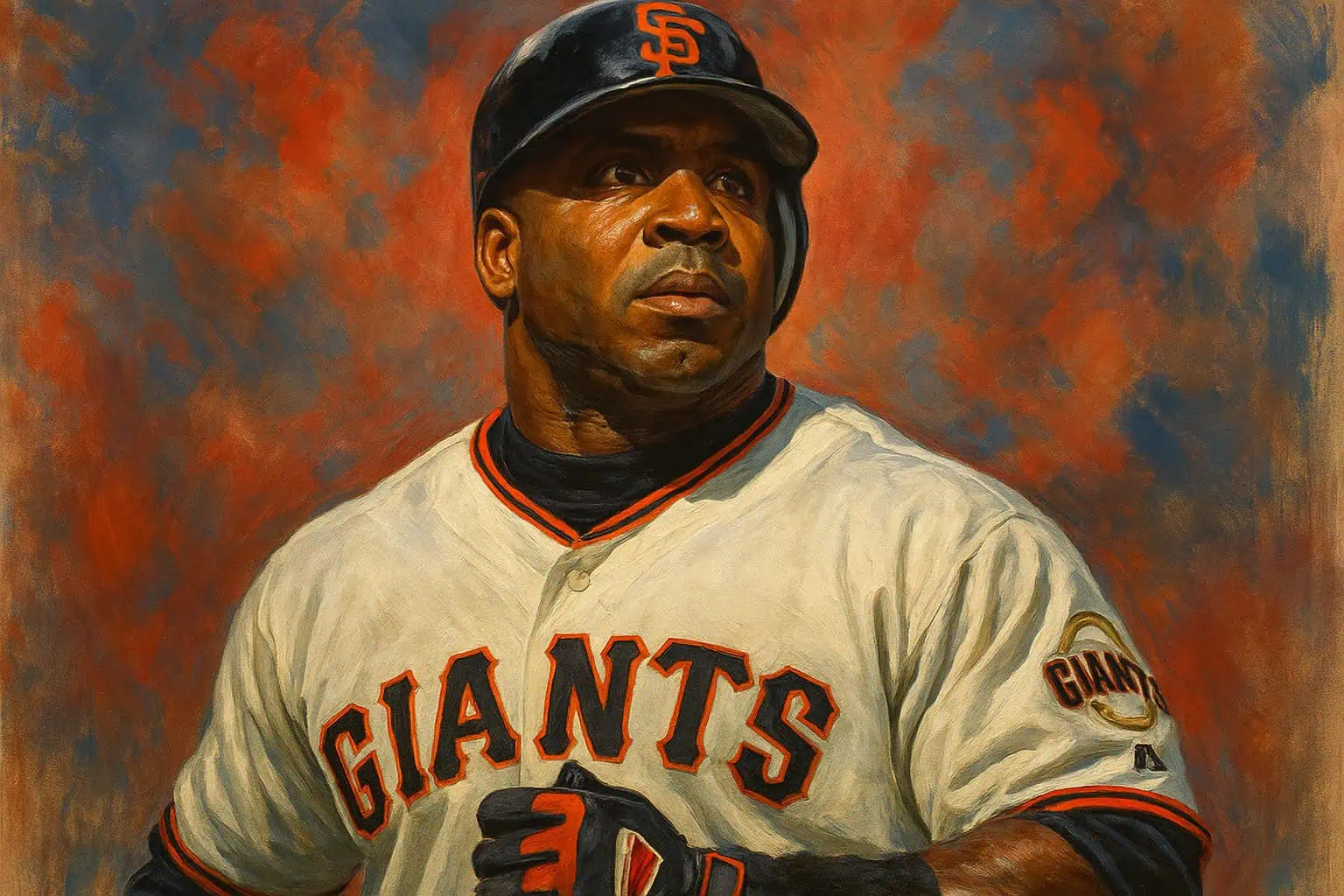
Barry Bonds didn’t just break records in 2001—he obliterated them with the force of a nuclear explosion. His 73 home runs shattered Mark McGwire’s mark by three, while his .328/.515/.863 slash line produced a mind-bending 1.379 OPS that made pitchers question their life choices. The most telling stat wasn’t the homers, though. It was the 177 walks, as opposing managers essentially forfeited entire at-bats rather than face the inevitable carnage that followed when Bonds actually got something to hit.
Babe Ruth’s 1921 Rampage: The Year Baseball Lost Its Mind
In 1921, Babe Ruth hit .378 with 59 home runs and 171 RBIs, numbers so absurd they seem like typos in today’s game. His .846 slugging percentage and 1.359 OPS represented a level of offensive dominance that made the dead-ball era officially extinct, as Ruth single-handedly transformed baseball from a game of bunts and stolen bases into a showcase of raw power. The Bambino’s 457 total bases that season remain a record that stands over a century later, a testament to his ability to turn every at-bat into a potential highlight reel moment.
Ted Williams’ .406 in ’41: The Last Dance with Perfection

Ted Williams entered the final day of the 1941 season hitting .39955, technically .400 when rounded up, but the Splendid Splinter refused to sit on his laurels. Instead, he played both games of a doubleheader and went 6-for-8, finishing at .406 and becoming the last player to reach that sacred threshold. Williams’ achievement becomes even more remarkable when you consider he did it while DiMaggio was capturing the nation’s attention with his 56-game hitting streak, proving that true greatness doesn’t need the spotlight to shine.
Mickey Mantle’s 1956 Triple Crown: Power from Both Sides of Paradise
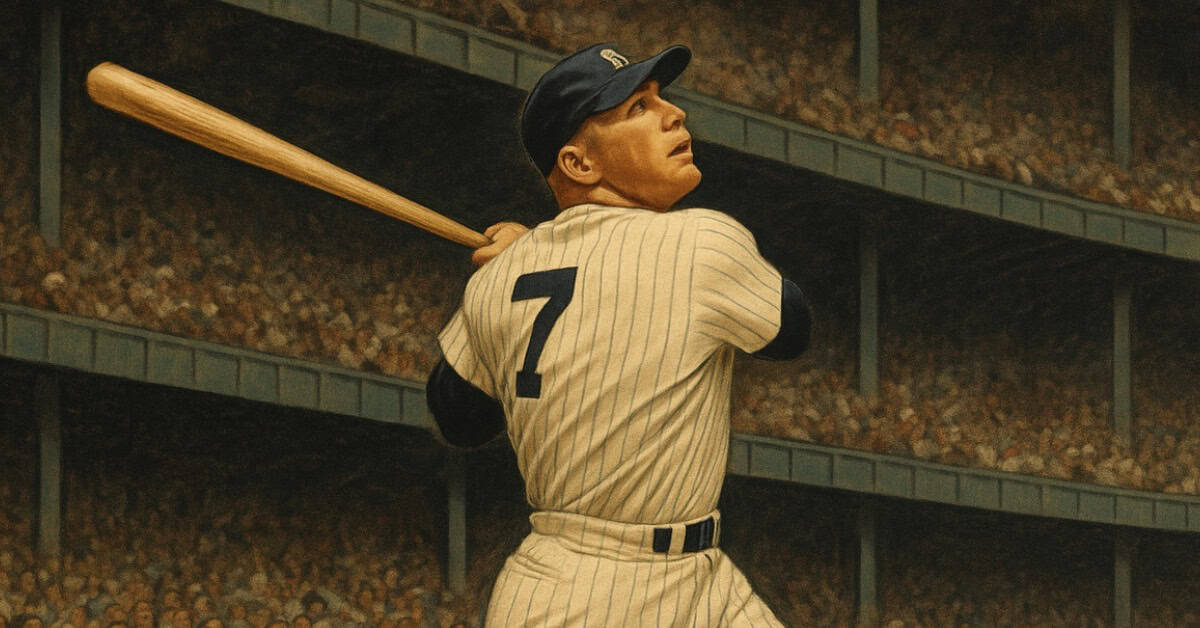
Mickey Mantle’s 1956 Triple Crown season (.353/52/130) showcased the switch-hitting wonder at his absolute peak, combining raw power with surprising batting average prowess. The Commerce Comet’s 210 OPS+ that year demonstrated how he could terrorize pitchers from either side of the plate, making him virtually unhittable regardless of the matchup. Mantle’s ability to launch tape-measure home runs while maintaining elite contact skills represented the perfect marriage of power and precision, a combination that would make him the last American League Triple Crown winner for 56 years.
Lou Gehrig’s 1927 Shadow: Playing Second Fiddle to Immortality

While Babe Ruth was chasing 60 home runs in 1927, Lou Gehrig quietly assembled one of the greatest offensive seasons in baseball history, hitting .373 with 47 homers and a staggering 175 RBIs. The Iron Horse’s 1.240 OPS would have been the story of any other season, but playing in Ruth’s shadow meant his brilliance was often overlooked by a public mesmerized by the Bambino’s historic chase. Gehrig’s 175 RBIs remain one of the highest totals in baseball history, a testament to his ability to drive in runs at a pace that seems impossible in today’s game.
Rogers Hornsby’s 1922 Masterpiece: When .400 Was Just the Beginning
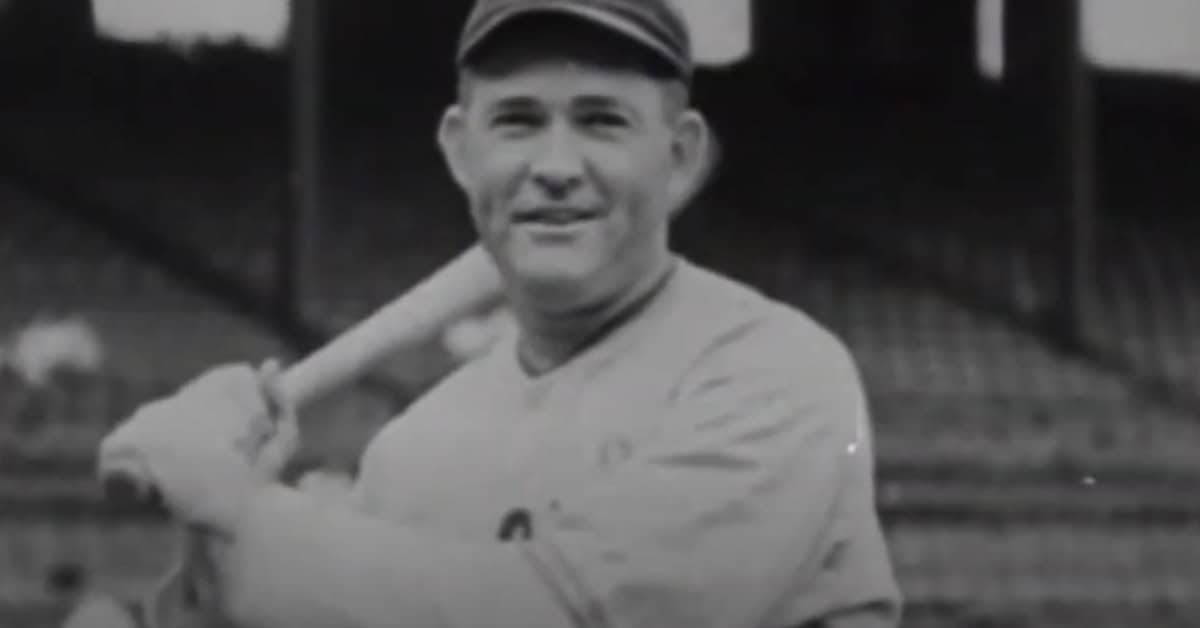
Rogers Hornsby’s 1922 season remains the gold standard for offensive excellence, as the Rajah hit .401 with 42 home runs and 152 RBIs while posting a ridiculous .722 slugging percentage. His 1.181 OPS that year represented a level of dominance that made him virtually unstoppable, combining elite contact skills with surprising power in an era when most players chose one or the other. Hornsby’s ability to hit for both average and power made him the prototype for the modern superstar, proving that .400 hitters could also be home run champions.
Barry Bonds’ 2002 Encore: The Sequel That Somehow Topped the Original

After breaking the home run record in 2001, Barry Bonds somehow found another gear in 2002, hitting .370/.582/.799 with 46 homers and an otherworldly 198 walks. His 1.381 OPS actually topped his record-breaking 2001 campaign, while his .582 on-base percentage remains a modern record that seems untouchable. The fact that Bonds received 68 intentional walks that season—more than some entire teams—speaks to the level of fear he instilled in opposing managers, who preferred to face the next batter rather than risk another Bonds moonshot.
Babe Ruth’s 1920 Revolution: The Home Run That Changed Everything
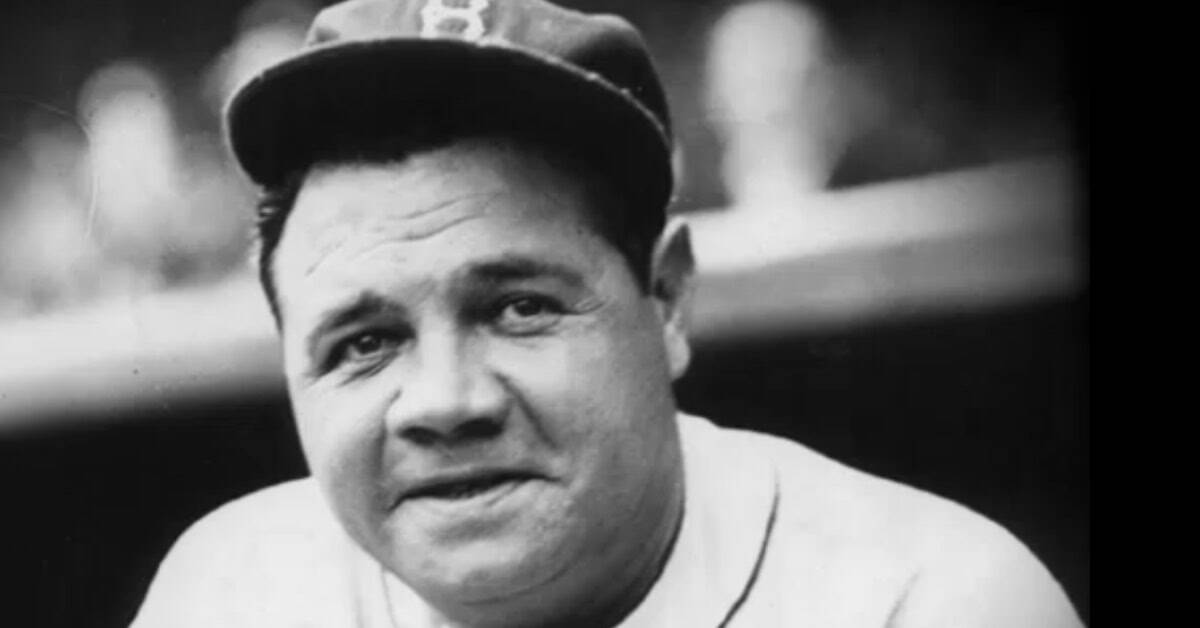
Babe Ruth’s 1920 season didn’t just break records—it shattered the very concept of what baseball could be, as his 54 home runs nearly doubled his own previous record of 29. The Sultan of Swat’s .847 slugging percentage and 1.379 OPS introduced America to a new style of baseball, one where the long ball reigned supreme and fans came to the ballpark hoping to witness history. Ruth’s revolutionary season marked the end of the dead-ball era and the beginning of baseball’s golden age, proving that sometimes one man really can change an entire sport.
Mickey Mantle’s 1957 Poetry: The .365 Season That Defied Physics

The year after his Triple Crown triumph, Mickey Mantle somehow got even better, hitting .365 with 34 home runs and posting a career-high 221 OPS+ that remains one of the highest single-season marks in baseball history. Despite battling the injuries that would plague his entire career, the Commerce Comet’s 1957 campaign showcased his ability to hit for average while maintaining his legendary power, creating a combination that seemed to defy the laws of physics. Mantle’s .365 average that season proved he wasn’t just a slugger—he was a complete hitter who could beat you in multiple ways.
Frank Robinson’s 1966 Baltimore Coronation: Triple Crown in a New Kingdom

Frank Robinson’s 1966 Triple Crown season (.316/49/122) was the perfect introduction to Baltimore, as the newly acquired slugger led the Orioles to their first World Series championship while becoming the first player to win MVP awards in both leagues. Robinson’s seamless transition from Cincinnati to Baltimore proved that greatness travels well, as he demolished American League pitching with the same ferocity that made him a star in the National League. His Triple Crown achievement capped off one of the most successful trades in baseball history, proving that sometimes a change of scenery is exactly what a superstar needs to reach immortality.
Shohei Ohtani’s 2024 50/50 Miracle: When Fantasy Baseball Became Reality

Shohei Ohtani’s 2024 campaign rewrote the laws of baseball physics, as the two-way superstar became the first player in MLB history to reach 50 home runs and 50 stolen bases in a single season. His final tally of 54 homers and 59 steals, combined with a .310/.390/.646 slash line, represented a combination of power and speed that seemed impossible in the modern era. Ohtani’s historic 50/50 achievement proved that even in an age of specialization, true greatness knows no boundaries, as the Japanese sensation redefined what it means to be a complete player in ways that left veteran scouts scrambling for new superlatives.