Last Updated: September 16th, 2026 by Matthew Brown
There is one thing that fans of sports teams hate to hear from players, coaches, and executives alike: that it's a business. All that passion that is left on the playing surface, all that competitive fire, all of that dedication to the sport still only trails the importance of the business.
Don't lose this article. Enter your email below, and I'll send it to you right now. Plus, we'll send you other unbelievable stories from baseball's past.
Where does that come from? Well, the top, of course. The owners have to make money to keep the franchise running, or at least that's what they think. There isn't that much sacrifice when everyone else is sacrificing for you.
This is a list of MLB owners who have defined that way of thinking throughout baseball history. Let's go through them and talk about what made them so infamous.
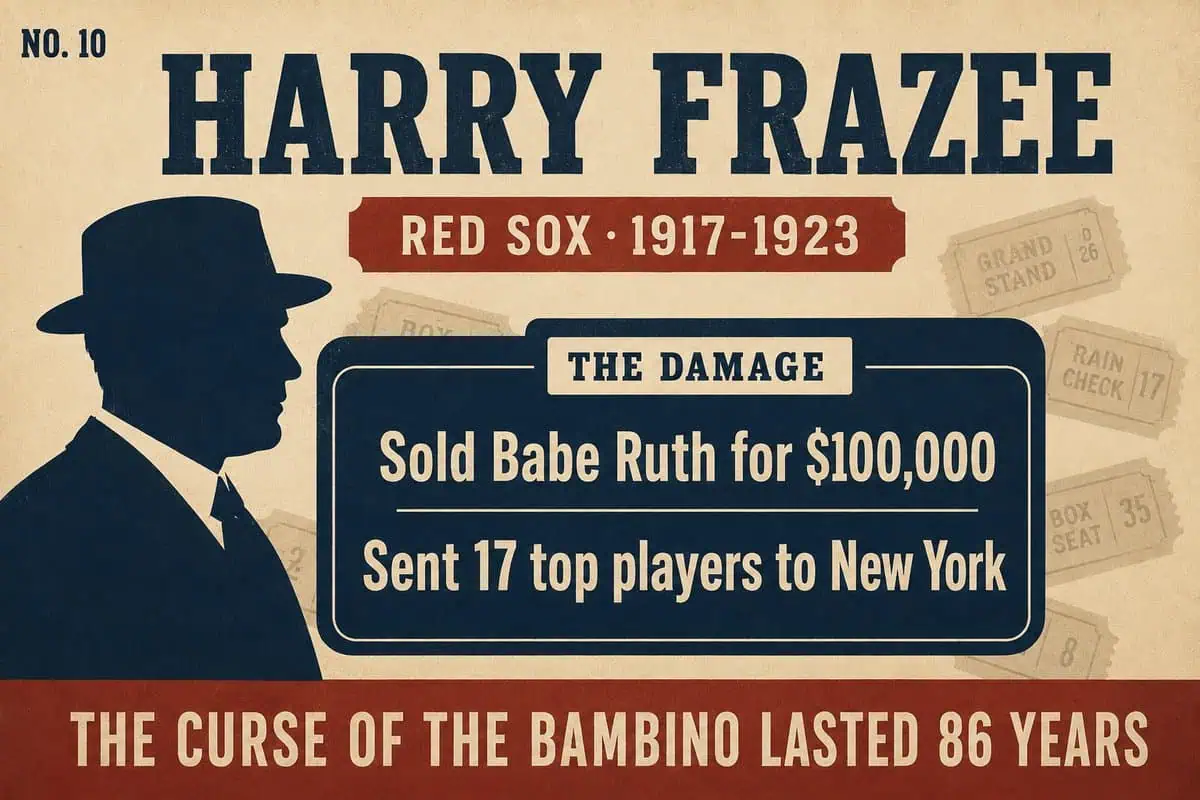
10. Harry Frazee – Boston Red Sox (1917-1923)

Now this was just bad business. Harry Frazee owned the Red Sox when they had a star pitcher who was making a name for himself in the sport. This player could pitch a shutout and hit a home run in the same game. There was a lot of value in the amount of entertainment he provided the fans.
Frazee, however, had other entertainment dreams in mind. He wanted to produce a Broadway show, but needed some cash. He saw his best Red Sox player as an asset and sold him to the Yankees for $100,000. I'm sure you know who that player was… Babe Ruth.
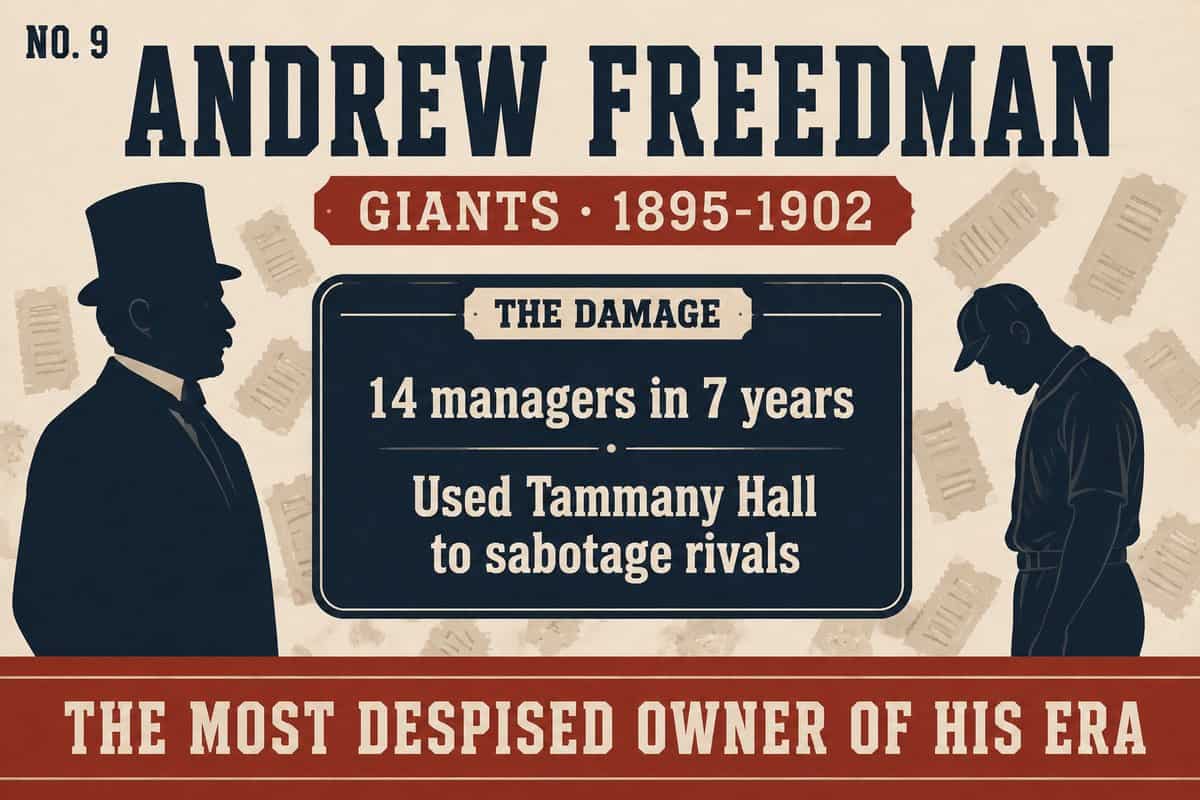
9. Andrew Freedman – New York Giants (1895-1902)

Leaders come in all forms. Back in the day, it was almost expected to lead with a forceful nature and act like you're an army general. Andrew Freedman did that for years. He owned the New York Giants from 1895 – 1902 and thought he was ruling with an iron fist. Instead, it came off like he was just a really bad bully.
He had a revolving door for the manager spot while making it hard for the players to feel like they were their own men. Even worse, Freedman used his political ties to undermine his fellow owners. Hard to believe that his name phonetically matches one of the greatest baseball minds in baseball today.
8. Jeffrey Loria – Montreal Expos/Miami Marlins (1999-2017)

Jeffrey Loria kind of ruined a part of baseball for kids born in the '90s. The Expos had exciting young talent while the Marlins were winning a championship. Loria had a controlling stake in both franchises at separate times in his dealings within the MLB. It's just that he was only in it to make a profit.
If you don't know already, baseball owners know that they can guarantee a profit by keeping their costs low and letting the long 162-game season play out. Plus, the TV-revenue sharing gets to even some things out. Loria took advantage of both and more. He let the Expos flounder into oblivion by suspiciously selling them to the MLB in order to buy the Marlins.
The city of Montreal will never forget how the Expos were stolen from them, while the city of Miami forgets that the Marlins are there all the time.
7. William Cox – Philadelphia Phillies (1943)

This one became a universal agreement very quickly on how bad William Cox was as an owner. He bought the Philadelphia Phillies in 1943 and was caught gambling.
He was banned from baseball after just one year of ownership. He says he only bet on his team winning, but with a 64-90 record that season, I highly doubt that.
6. Gerry Nugent – Philadelphia Phillies (1933-42)

This one is very interesting, as Gerry Nugent actually wasn't much of a businessman when he took over the Phillies in 1933. He was a former shoe salesman who worked his way up the organization while being married to someone who had shares in the team. He eventually became the owner and had a bright mind for baseball. He invested in player development and used his keen eye to spot talent.
However, he didn't have the business acumen to keep the team afloat, as he always had to sell his best players or give up his own personal money to make up the debt. Business-wise, his ownership of the Phillies was a disaster.
5. Tom Werner – San Diego Padres (1990-94)

Tom Werner may be better known now for his success in Boston, but he was not always this good. Werner was part of the ownership of the San Diego Padres back in the 1990s, which didn't last very long. With his success in the TV industry, he had some cross-promotions with the Padres while he was in charge. Those weren't exactly hits.
Speaking of hits, Tony Gwynn was easily his star player and one he probably should've built around to make runs at a World Series title. However, he constantly sold great pieces for little baseball value. It's unfortunate that some of Gwynn's best years were wasted on a first-time owner like Werner.
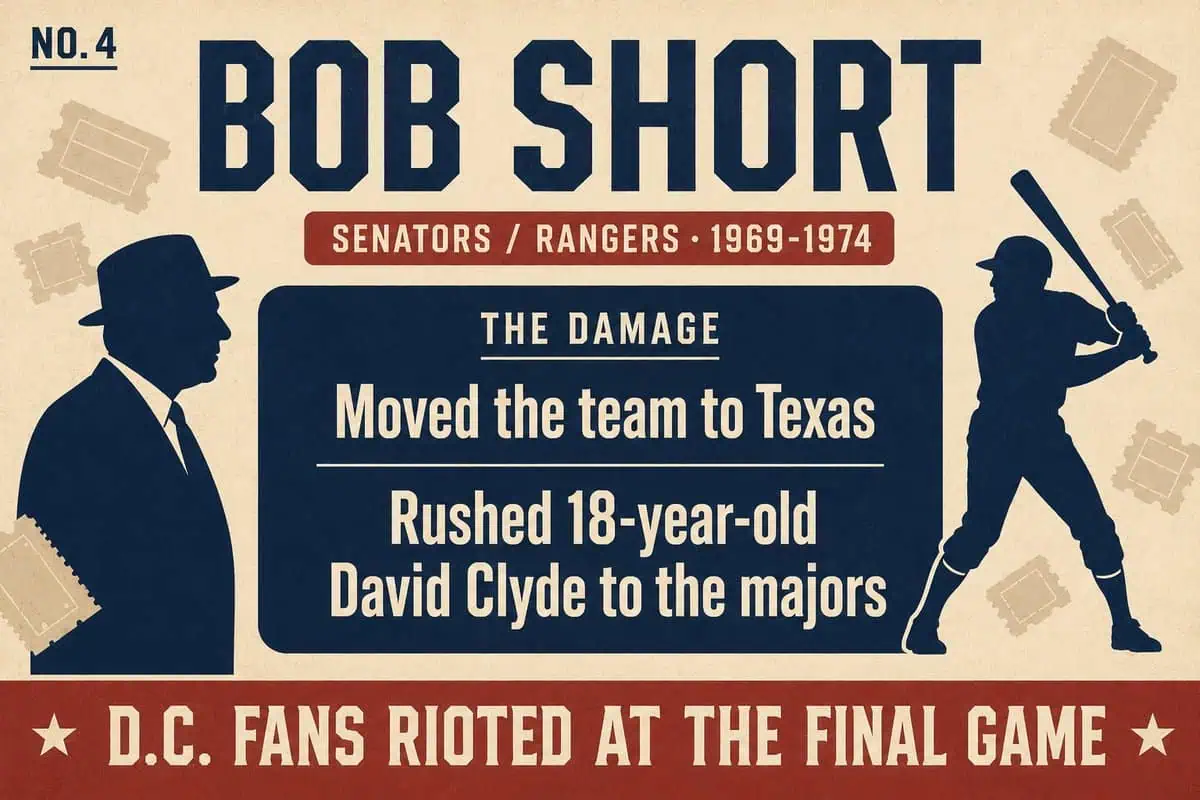
4. Bob Short – Senators/Rangers (1969-1974)

If you ever wonder why the NBA has a team named the Lakers, not the Great Lakes, Bob Short is the reason why. But we're not here to talk about his basketball ventures; we're here to talk about one that's way worse.
The second expansion team, the Washington Senators, was bought by Short, and he immediately took control. He made himself general manager, thinking he had the best mind in baseball. In short, he didn't. After one winning season, it was all downhill for the Senators, and then Short moved them away from D.C., which wouldn't see another baseball team until after the turn of the century.
3. Emil Fuchs – Boston Braves (1923-35)

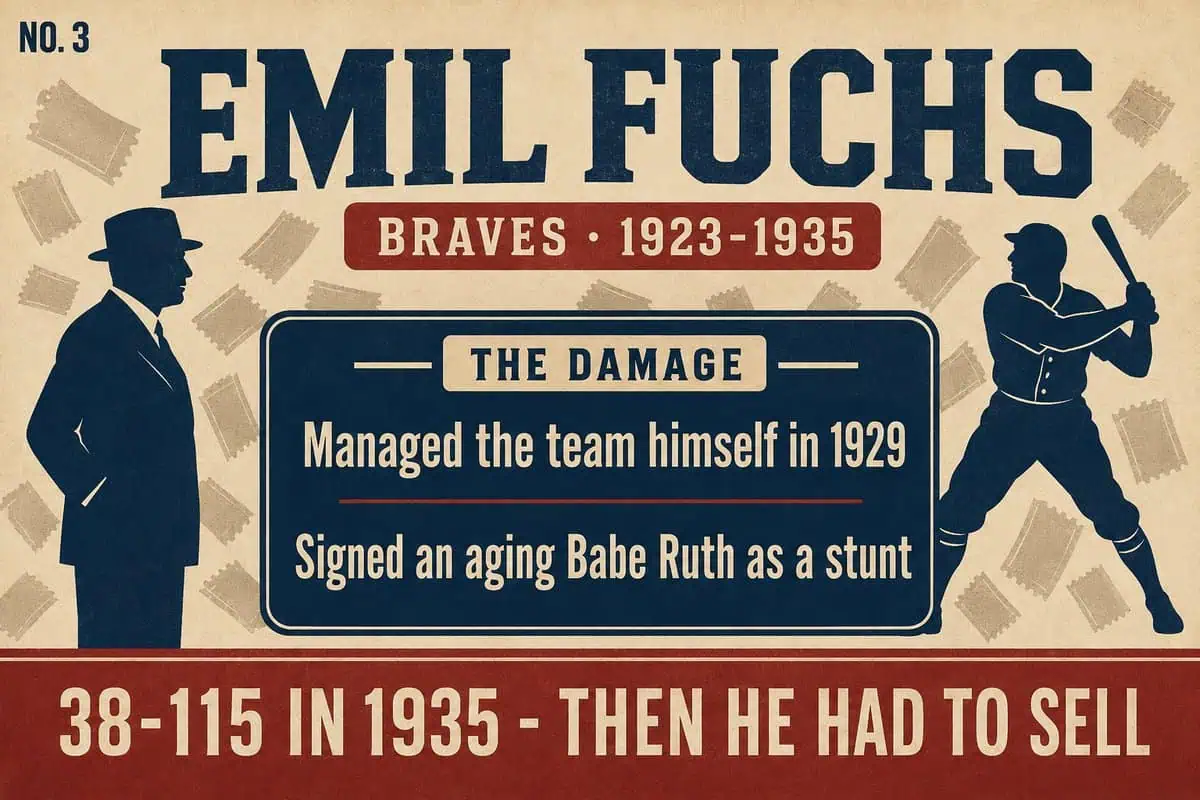
Emil Fuchs might be the worst owner in the history of the National League. His ownership of the Boston Braves was almost laughable as he kept running himself into trouble. After a handful of years, Fuchs was in some financial trouble and had to sell the great Rogers Hornsby to the Chicago Cubs to make ends meet.
His manager had quit as well, so he named himself manager to keep the team running. That's just the start. Fuchs had the bright idea to start holding greyhound racing at the ballpark to get some revenue, but the frowned-upon activity was eventually shut down by the league and the other owners.
He also missed a number of rent payments as the Braves puzzlingly had to pay for the use of Braves Field since it was owned by the team's former owner. Fuchs was ultimately ousted by the league as he was unfit to be an effective baseball owner.
2. George Argyros – Seattle Mariners (1981-89)

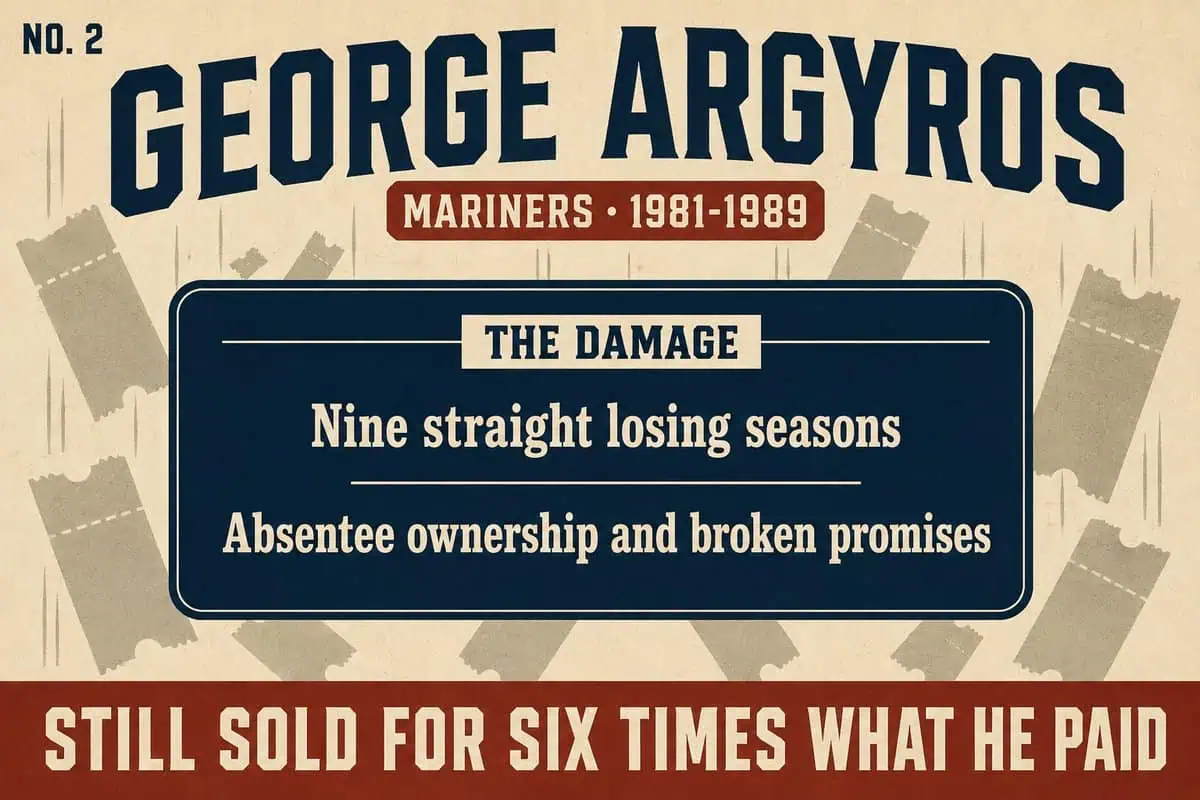
George Argyros is actually a successful businessman who just didn't have the wherewithal or the passion to invest in the team he had bought. He was the owner of the Seattle Mariners in the '80s and saw losing seasons every year he was at the helm.
The Mariners just couldn't find consistency offensively or defensively, and Argyros was not willing to spend to help them out. He was just one of those penny-pinching businessmen, which isn't as effective in baseball as it is on Wall Street.
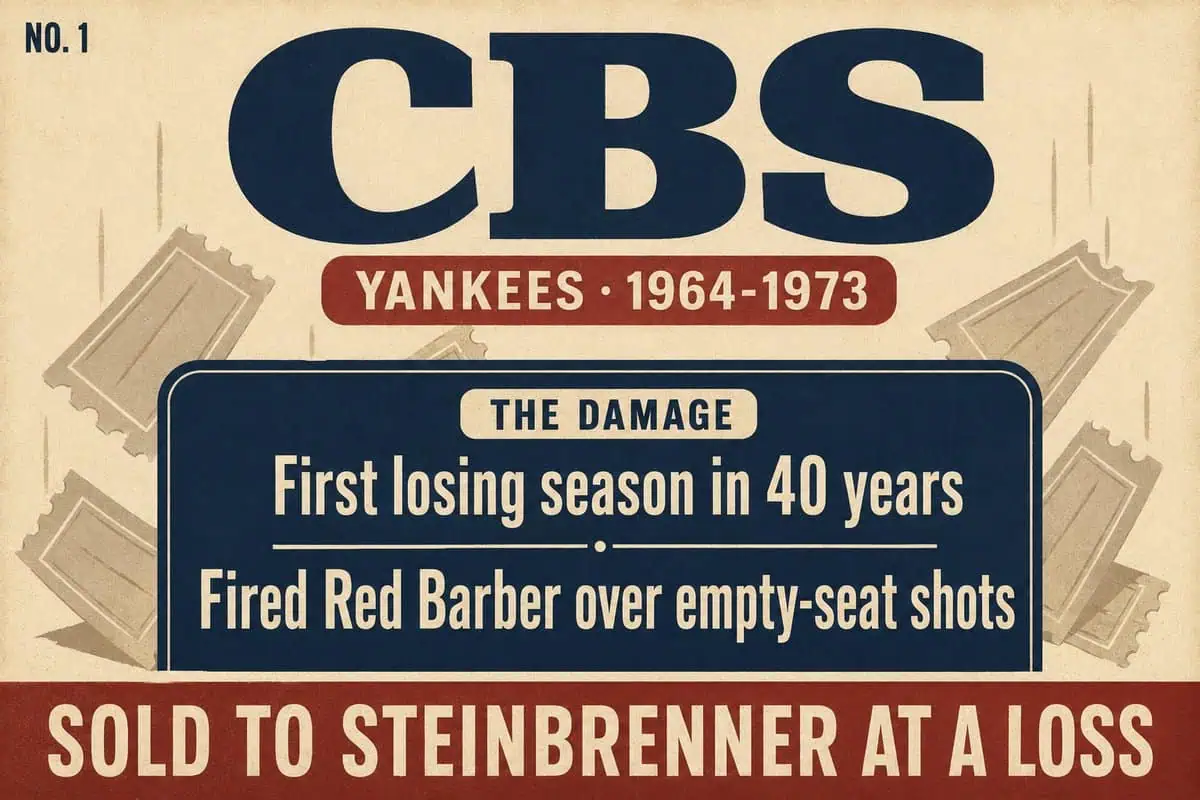
1. CBS – New York Yankees (1964-73)

I am biased on this one. As a journalist and broadcast journalist, I have the utmost respect for Red Barber. He was most notably the play-by-play broadcaster for the Brooklyn Dodgers, mentoring the legendary Vin Scully. From 1954 to 1966, Barber was actually the voice of the New York Yankees.
That was until their new owners, CBS, decided to fire him after he gave the TV audience some honest reporting and asked the cameras to shoot an empty stadium while the game was going on. Even though his paycheck came from the Yankees, his true journalistic habits couldn't be ignored, and he had to stick to what he knew. For that, I will always respect him.