

Last Updated: June 17th, 2026 by Michael Schatz
Before sabermetrics and launch angles, before pitch counts and load management, there was Mickey Mantle—a switch-hitting thunder god from Commerce, Oklahoma, who played baseball the way it was meant to be played. For those who remember when October meant only one thing and every kid knew the Yankee lineup by heart, here’s why The Mick remains the greatest to ever step between the lines.
Don't lose this article. Enter your email below, and I'll send it to you right now. Plus, we'll send you other unbelievable stories from baseball's past.
The 565-Foot Home Run That Still Has Witnesses Arguing About Where It Actually Landed
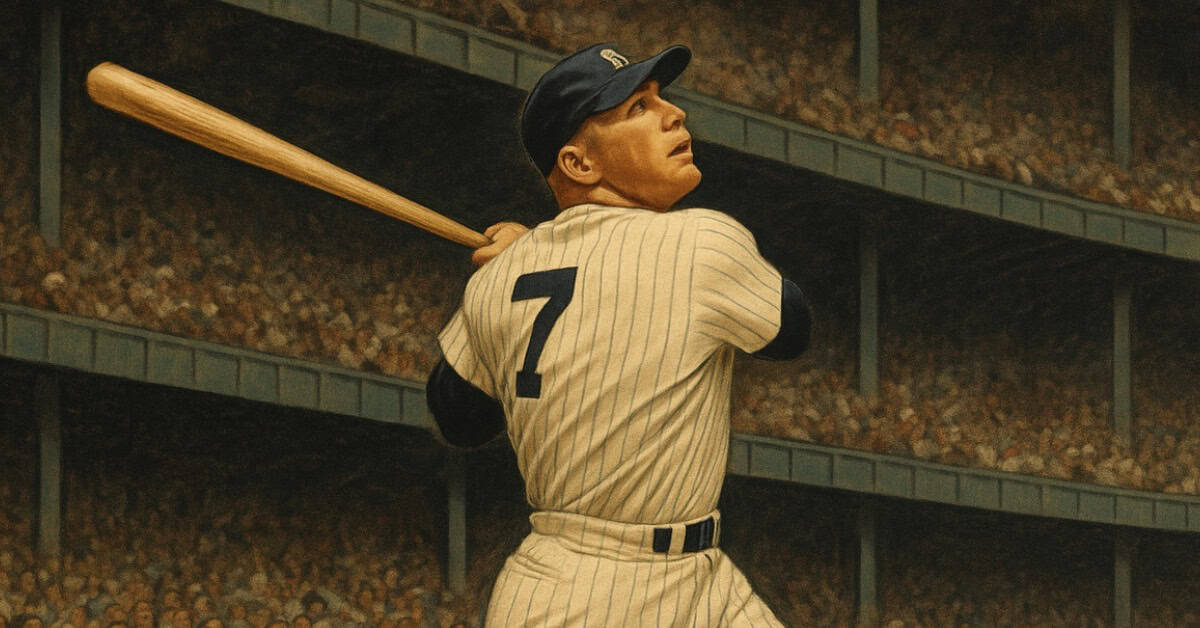
On April 17, 1953, at Griffith Stadium, Mantle launched a Chuck Stobbs fastball that traveled farther than any baseball hit before or since. The ball cleared the left-field bleachers, sailed over the beer sign, and landed in a backyard where a 10-year-old boy found it and kept it for 60 years. Yankees publicist Red Patterson paced off the distance and declared it 565 feet—a number that became gospel in an era when men measured their worth by how far they could hit a baseball.
Playing Through Pain That Would Sideline Today’s Athletes for Entire Seasons
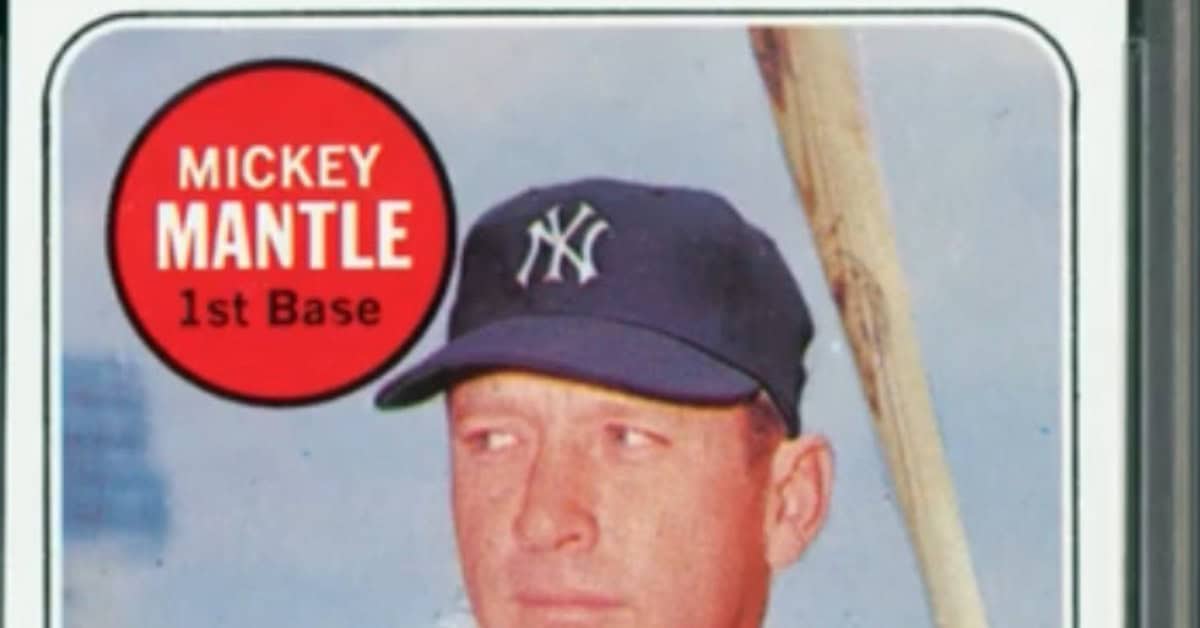
Mantle played 18 seasons on legs held together by tape, determination, and whatever painkillers 1950s medicine could provide. His right knee was destroyed in the 1951 World Series when he caught his spikes on a drain pipe, yet he played through the chronic injury for the rest of his career. He wrapped those knees like a mummy before every game, hobbled to the plate, and still managed to terrorize pitchers with both speed and power that defied medical logic.
Switch-Hitting Power That Made Pitchers Question Their Career Choices
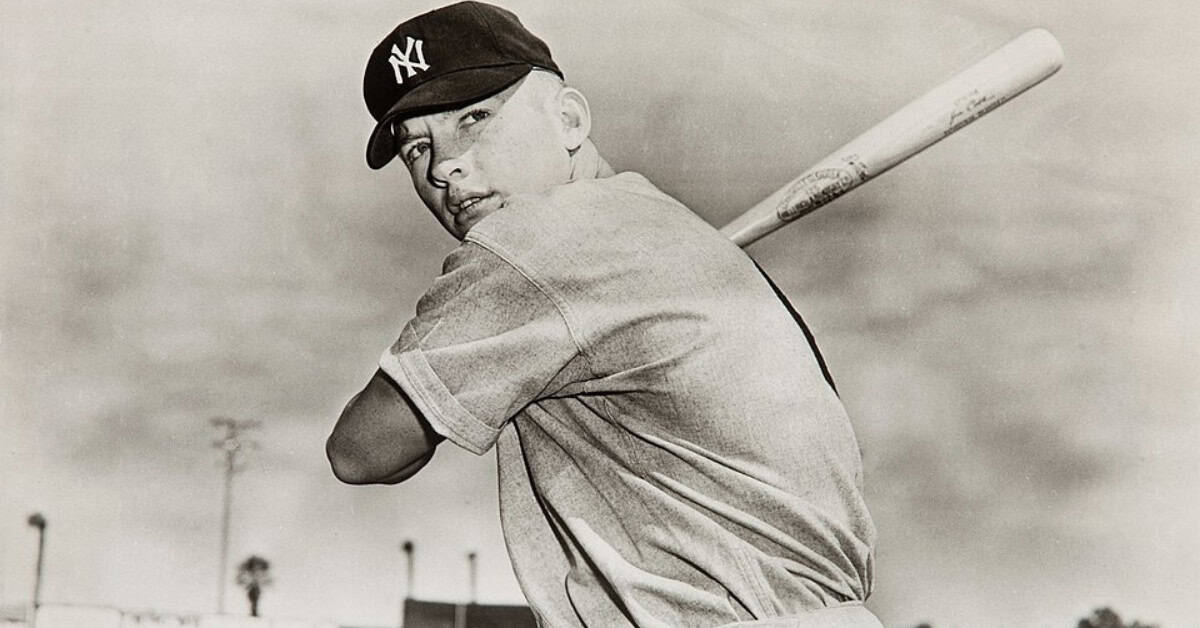
No pitcher could escape Mantle’s wrath by simply being left-handed or right-handed—he’d crush you from either side of the plate with equal fury. His 536 career home runs included tape-measure shots from both boxes, and he remains the only switch-hitter to hit 50 homers in a season. Watching him dig in from the opposite side wasn’t just strategy; it was psychological warfare that left hurlers wondering if there was any safe way to attack the most dangerous hitter in baseball.
The Triple Crown Season When Baseball Was Still America’s Only Obsession

In 1956, when every American knew exactly where they were for the World Series and transistor radios crackled with Mel Allen’s voice, Mantle achieved baseball’s holy grail. He hit .353 with 52 home runs and 130 RBIs, becoming just the 12th player to win the Triple Crown. This wasn’t just statistical dominance—it was appointment television before television mattered, water cooler conversation when water coolers were the internet, and the kind of season that made grown men stop their cars to listen to the final at-bat.
Speed That Made Him the Only Player to Beat Out Bunts from Both Sides of the Plate

Before those knees betrayed him, Mantle could fly down the first-base line in 3.1 seconds—faster than most players today despite wearing heavy wool uniforms and leather cleats that belonged in a museum. He’s the only player in history who could drag bunt for a hit batting left-handed, then turn around and beat out a swinging bunt from the right side. That combination of raw speed and switch-hitting ability created a nightmare scenario for infielders who never knew which way the blur in pinstripes would be running.
World Series Heroics When October Baseball Actually Mattered to Every American

Mantle played in 12 World Series and won seven championships when October baseball shut down the entire country for two weeks. His 18 World Series home runs set a record that still stands today, including clutch shots that fathers still describe to sons with the reverence reserved for war stories. He hit .257 in Series play, but those numbers don’t capture the moments when he single-handedly shifted the momentum of games that had 70 million Americans glued to their black-and-white Zenith televisions.
Raw Power Numbers That Don’t Need Modern Analytics to Impress

You don’t need exit velocity or launch angle to understand that 536 home runs in an era of dominant pitching, playing half your games in cavernous Yankee Stadium, represents ungodly power. Mantle’s slugging percentage of .557 came in an era when pitchers threw complete games with 95-mph fastballs and weren’t afraid to knock you down. His 1,733 career walks prove that opposing managers would rather face Yogi Berra with runners in scoring position than let The Mick beat them with one swing.
The Country Boy Charisma That Made Yankees Fans Love a Kid from Oklahoma

In an era when athletes were expected to be humble and hardworking, Mantle’s combination of small-town Oklahoma charm and big-city performance made him the perfect American hero. He signed autographs with a genuine smile, spoke in an aw-shucks drawl that made him sound like your neighbor’s kid, and carried himself with the kind of natural charisma that couldn’t be manufactured by Madison Avenue. Even in pinstripes, he remained the Commerce Comet—a reminder that greatness could come from anywhere if you had enough talent and heart.
Playing Center Field in Yankee Stadium Like He Owned Every Blade of Grass

Mantle patrolled center field in the House That Ruth Built like a man defending his own backyard, covering ground that seemed impossible even for someone with his speed. He tracked down fly balls in Death Valley—that vast expanse of center field that swallowed lesser players’ careers—and made catches that had fans wondering if the laws of physics applied to him. His glove work often gets overshadowed by his hitting, but he won a Gold Glove and saved countless games with defensive plays that looked routine only because he made them look easy.
Career Statistics That Look Even Better Without Performance-Enhancing Asterisks

Mantle’s numbers carry the weight of authenticity that modern statistics can’t match—536 home runs, 1,509 RBIs, and a .298 lifetime average achieved with nothing but natural ability, determination, and whatever the trainer had in his medicine bag. His three MVP awards and 16 All-Star seasons represent pure talent unenhanced by anything except maybe a shot of cortisone and the kind of grit that doesn’t show up in spreadsheets. In an era when every record comes with footnotes and skepticism, Mantle’s legacy remains as clean as his swing was powerful.