


Last Updated: June 17th, 2026 by Michael Griffin
When the Angels put 21-year-old Jim Abbott in their 1989 rotation without a Minor League appearance, critics questioned whether manager Doug Rader was rushing him or using his debut as publicity. Abbott answered with a 12-12 rookie record and a 3.92 ERA.
Don't lose this article. Enter your email below, and I'll send it to you right now. Plus, we'll send you other unbelievable stories from baseball's past.
Born without a right hand, Abbott built a 10-season Major League career, threw a no-hitter for the Yankees, and helped the United States win the 1988 Olympic demonstration tournament. Those documented achievements are more precise than claiming one player changed everyone’s definition of disability.
It Began With a Question
MLB.com writer Mike Lupica recalled asking the 18-year-old Abbott what he could not do. Abbott answered with a joke: “I can’t button the darn buttons on my left cuff.”
Abbott repeatedly made clear that he wanted to be evaluated as a pitcher rather than as a spectacle. His record supports that approach: college and international success preceded a decade in the Major Leagues, and the details matter more than broad claims about what all of baseball believed.
A Glove Transfer Built Through Repetition
After releasing the ball with his left hand, Abbott quickly moved his glove from the end of his right arm to his left hand. On a ground ball, he secured the glove against his body, transferred the ball, and threw with the same left hand. The practiced sequence directly answered scouts’ fielding concern without describing it as magic.
Abbott recalled that opponents bunted on him eight consecutive times in a ninth-grade game. He threw out the final seven batters, and the opponent abandoned the strategy. His own account supports the result; the source’s claim that every play was fielded perfectly went beyond it.
He Went From Round 36 to No. 8 Overall

The Blue Jays selected Abbott in the 36th round of the 1985 Draft, but he did not sign. He spent the next three years at the University of Michigan, where the Wolverines won two Big Ten titles. The Angels then selected him eighth overall in the 1988 Draft.
Abbott made his MLB debut for the Angels on April 8, 1989, without first appearing in a Minor League game. He went 12-12 with a 3.92 ERA in 29 starts as a rookie. Those results answer the publicity criticism directly without repeating it as a label for Abbott.
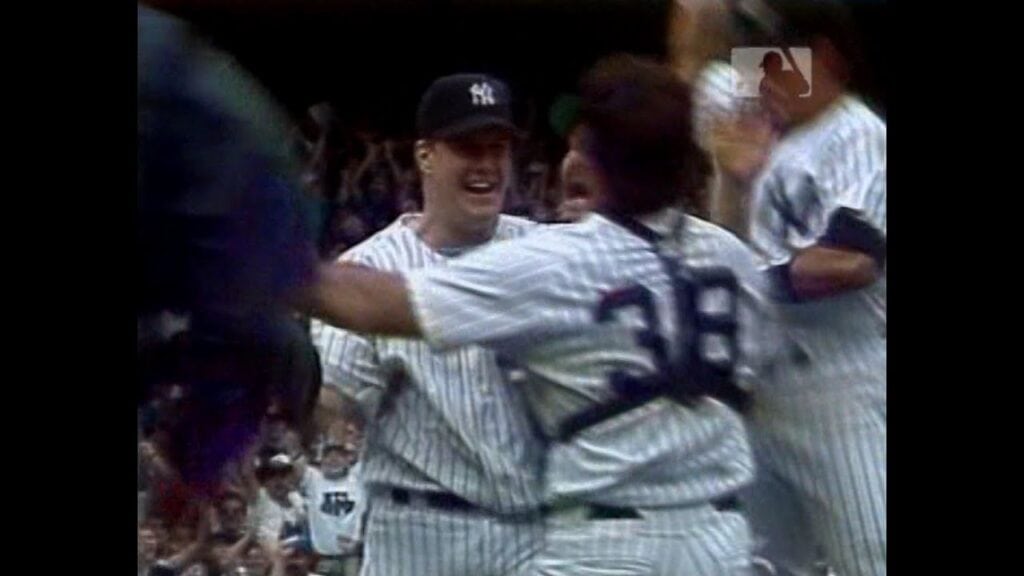
Abbott threw a complete game against Japan to clinch the 1988 Olympic demonstration tournament, when baseball was not yet an official medal sport. In 1991 he went 18-11 with a 2.89 ERA and finished third in AL Cy Young voting. On September 4, 1993, he threw a no-hitter for the Yankees against Cleveland.
Abbott’s achievement does not need an inaccurate first-of-its-kind claim. Pete Gray had already reached the Major Leagues as a one-armed outfielder in 1945. Abbott’s distinct record was 263 pitching appearances, including 254 starts, across 10 MLB seasons.
The glove transfer answered a practical defensive question, while Abbott’s pitching supplied the measurable case. He finished 87-108 with a 4.25 ERA and 888 strikeouts in 1,674 innings. The source’s claim that his method made him more efficient than many other pitchers had no defined measure and is omitted.
After the no-hitter, Don Mattingly told Sports Illustrated that “because it was Jim there was a little something extra.” The brief excerpt conveys a teammate’s reaction without turning Abbott’s achievement into a conclusion Abbott made about himself.
He Could Swing the Bat
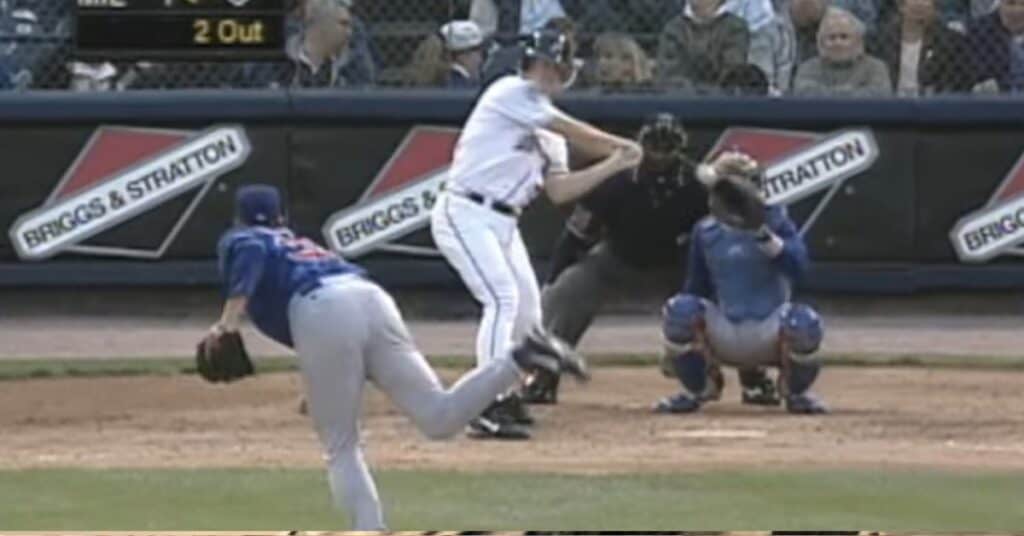
Abbott recorded his first Major League hit and RBI for Milwaukee on June 15, 1999, lining a single off Cubs pitcher Jon Lieber and into left field. The hit drove in a run in the fourth inning and gave Abbott a documented batting milestone without speculating about what might have happened next.
Fifteen days later, Abbott hit a bases-loaded, two-run single off Lieber at Wrigley Field. Those were the only two hits of Abbott’s career: he finished 2-for-21, with both hits and all three RBI coming against the same pitcher.
He Framed His Own Story
Mattingly’s reaction belongs to one moment, not to a universal definition of adversity. Abbott’s career is strongest when described through his own perspective and the baseball record rather than when the article assigns a lesson to every person with a disability.
The baseball-specific questions in 1989 were whether Abbott could field after delivering a pitch and whether he was ready to skip the Minors. His practiced glove transfer and 12-win rookie season answered those questions. No comparison with modern analytics is needed to establish what he accomplished.
Abbott resisted being defined only as inspirational. “Whether you’re rich or poor or one-handed or whatever, your own childhood just seems natural, because it’s the only one you know,” he told Lupica before college.
That perspective argues against reducing Abbott to either a limitation or an inspirational symbol. He was a Michigan standout, an international champion, a Major League starter, and a no-hit pitcher whose adaptation was part of his game rather than the whole of his identity.
Abbott’s official career line is the lasting answer to the early publicity debate: 10 MLB seasons, 87 wins, a third-place Cy Young finish, and a no-hitter at Yankee Stadium.