


Last Updated: June 17th, 2026 by Jake Cain
In the storied annals of baseball history, few characters loom as large as Ty Cobb, whose competitive ferocity on the diamond was matched only by the tempestuousness of his off-field escapades. As baseball historian Andrew Martin recounts, one particular event from 1914 stands out, not merely for its absurdity but for the potential ramifications it bore on Cobb’s storied career—all over the price of a fish.
Don't lose this article. Enter your email below, and I'll send it to you right now. Plus, we'll send you other unbelievable stories from baseball's past.
Quick Summary
- Ty Cobb was detained overnight after a fight with a butcher over 20 cents worth of allegedly spoiled fish.
- The altercation, which involved Cobb demanding an apology at gunpoint, resulted in a broken thumb and 22 missed games.
- The Detroit Tigers’ performance suffered during Cobb’s absence, falling rapidly out of contention.
- To avoid jail time for the incident, Cobb pleaded guilty and paid a $50 fine.
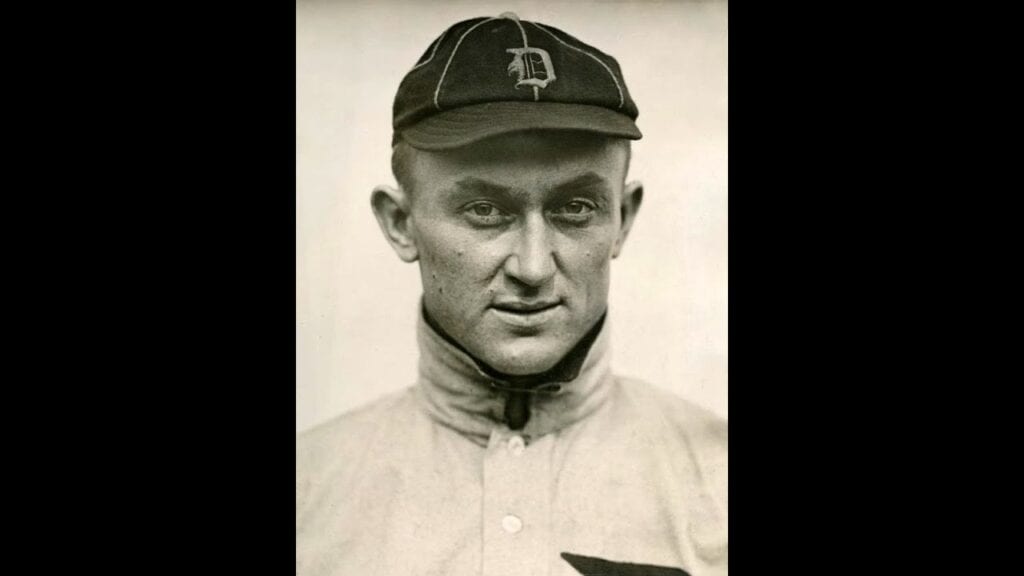
It was a muggy June evening when Cobb, Detroit Tigers’ linchpin, left Navin Field after a showdown with the Washington Senators. But the real showdown was awaiting at home. There, Cobb’s wife relayed the day’s distressing events: a squabble with the local butcher over fish that seemed past its prime. Refusing a refund, the butcher had incited Mrs. Cobb’s fury, and by extension, Cobb’s.
Martin paints a vivid picture of what followed: Cobb, inflamed by the butcher’s insolence, demanded satisfaction. With Senators’ manager Clark Griffith as an incredulous audience, Cobb rang up the butcher, W.L. Carpenter, and in a heated exchange, accused him of upsetting his wife and maligning her honesty. The matter escalated quickly when Cobb, armed and incensed, sprinted to the butcher shop to enforce an apology.
The butcher obliged, but the peace was paper-thin. Carpenter’s brother-in-law, Harold Harding, entered with a butcher’s cleaver and a demand for Cobb to leave. What ensued was a brawl as chaotic as any bench-clearing melee Cobb had ever been part of on the field.
“Our little affair was practically over when Harding butted in… He seemed to want trouble and I gave him what he was looking for,” Cobb later recounted to the police. In the fracas, Cobb’s gun was brandished more as a club than a firearm, and the butcher shop became an unlikely battleground.
The altercation left Harding bloodied, Cobb with a broken thumb, and the precinct with a high-profile inmate for the night. Charges were dropped by Harding the next day, only for Cobb to be re-arrested on counts of disturbing the peace after Carpenter decided to pursue payment for damages and the affront to his dignity.
“The easy thing would be to drop the whole matter,” Carpenter explained, “but I feel it my duty to the public to see that this wild man is halted in his mad career.”
Cobb’s pride was wounded, his team’s performance without him suffered, and his family life was upended as his wife retreated to Georgia. Cobb himself contemplated an exit from Detroit, possibly to join the rogue Federal League. However, his eventual plea deal, resulting in a fine of $50, kept him in the major leagues.
This fishy fiasco might have ended differently, perhaps turning the tide of baseball history, had Cobb’s career been derailed. Instead, Cobb’s legacy, and his 4,189 hits, remained intact, with this incident relegated to a historical footnote of what might have been.
Through Martin’s meticulous research, we are afforded a glimpse into the combustible nature of one of baseball’s immortals—a man who played for keeps, whether batting .300 or defending 20 cents’ worth of fish. For those eager to explore this fish tale further, cast your eyes on Martin’s in-depth exposé that showcases an extraordinary moment when baseball and dinner disputes collided head-on. Read Andrew Martin’s original story here.