
Last Updated: September 22nd, 2026 by Matthew Brown
The catcher position is one of the most unique in sports. It's such a specialized position where teams are keen to always have a backup that can just do the job behind the plate well and care less about their production as a hitter. It's the most physically draining position as well, with even the most durable catchers needing days off throughout a season. Let's honor those who commanded the position at an elite level, calling perfect pitches, gunning down would-be base stealers, and framing balls into strikes.
Don't lose this article. Enter your email below, and I'll send it to you right now. Plus, we'll send you other unbelievable stories from baseball's past.
How We Made This List
Obviously, Gold Gloves will be a big part of our list. We will also be taking a look at some other defensive stats that can factor into how these catchers have proven their talents behind the plate throughout their careers. You're going to see some names on this list that you won't see on any other list, which will make this a fun process to go through.
20. Brad Ausmus: The Staff Handler Managers Trusted
Before he became a manager and coach that you can find in dugouts today, Brad Ausmus was a very solid defensive catcher, earning three Gold Gloves throughout his 18-year career. He led the league in putouts and fielding percentage four times.
That shows his ability to call a good game and field his position. He also showed off his arm by leading the league in caught-stealing percentage in 1997.
| Brad Ausmus — Career | Total |
|---|---|
| G | 1971 |
| AB | 6279 |
| H | 1579 |
| HR | 80 |
| RBI | 607 |
| SB | 102 |
| AVG | .251 |
| OBP | .325 |
| SLG | .344 |
| OPS | .669 |
| All-Star selections | 1 |
| Gold Gloves | 3 |
19. Ted Simmons: The Switch-Hitting Stalwart (HOF)
Known more for his offense and switch-hitting ability, Ted Simmons still had to handle one of the nastiest pitchers of all time in Bob Gibson. That certainly didn't help his defensive statistics, but he was still able to prove his way onto this list by leading the league in assists twice as well as putouts.
He was one of the most durable catchers that you'll find in baseball, as he led in games caught multiple seasons. In 1975, he caught a whopping 154 games. That makes my knees hurt just thinking about it.
| Ted Simmons — Career | Total |
|---|---|
| G | 2456 |
| AB | 8680 |
| H | 2472 |
| HR | 248 |
| RBI | 1389 |
| SB | 21 |
| AVG | .285 |
| OBP | .348 |
| SLG | .437 |
| OPS | .785 |
| All-Star selections | 8 |
| Silver Sluggers | 1 |
18. Benito Santiago: The Rocket Arm
Benito Santiago is a perfect entry for this list in that he wasn't a starting catcher his entire career, but always was on a roster due to his ability to command as a backstop.
He earned three Gold Gloves to go along with his five All-Star selections and found himself thrust back into the starting spotlight at 37 years of age. That's when he was named the NLCS MVP when the Giants were making a playoff run in 2002.
| Benito Santiago — Career | Total |
|---|---|
| G | 1978 |
| AB | 6951 |
| H | 1830 |
| HR | 217 |
| RBI | 920 |
| SB | 91 |
| AVG | .263 |
| OBP | .307 |
| SLG | .415 |
| OPS | .722 |
| All-Star selections | 5 |
| Gold Gloves | 3 |
| Silver Sluggers | 4 |
| Rookie of the Year | 1 |
17. Russell Martin: The Modern Complete Catcher
Russell Martin is easily one of my favorites on this list. He played with heart and passion every single game. He showed durability as a young catcher for the Dodgers in games caught in back-to-back seasons, earning a Gold Glove in one of them.
He earned four All-Star selections across three franchises. Different teams saw the amount of value that he brought, and he proved them right every single time.
| Russell Martin — Career | Total |
|---|---|
| G | 1693 |
| AB | 5701 |
| H | 1416 |
| HR | 191 |
| RBI | 771 |
| SB | 101 |
| AVG | .248 |
| OBP | .349 |
| SLG | .397 |
| OPS | .746 |
| All-Star selections | 4 |
| Gold Gloves | 1 |
| Silver Sluggers | 1 |
16. Jason Varitek: The Game Caller
Jason Varitek is a legend in Boston. He dedicated his entire 15-year career to the Red Sox and was a trusted captain throughout. It's hard to measure his value, as a three-time All-Star with one Gold Glove.
He wasn't really considered elite defensively or offensively, but his leadership intangibles led every pitcher on the staff to trust him for years, which included knuckleballer Tim Wakefield, who probably couldn't trust any catcher more than Varitek.
| Jason Varitek — Career | Total |
|---|---|
| G | 1546 |
| AB | 5099 |
| H | 1307 |
| HR | 193 |
| RBI | 757 |
| SB | 25 |
| AVG | .256 |
| OBP | .341 |
| SLG | .435 |
| OPS | .776 |
| All-Star selections | 3 |
| Gold Gloves | 1 |
| Silver Sluggers | 1 |
| World Series titles | 2 |
15. Mickey Cochrane: Black Mike (HOF)
Mickey Cochrane played in the days when catchers received even more respect for how hard their job is, and rightly so. He won the MVP twice (1928 and 1934) while being named to the All-Star team twice as well.
He might have received even more All-Star selections had it been initiated sooner in his 13-year career, and also if he hadn't been hit in the head by a pitch, which sadly ended his playing days.
| Mickey Cochrane — Career | Total |
|---|---|
| G | 1482 |
| AB | 5169 |
| H | 1652 |
| HR | 119 |
| RBI | 832 |
| SB | 64 |
| AVG | .320 |
| OBP | .419 |
| SLG | .478 |
| OPS | .897 |
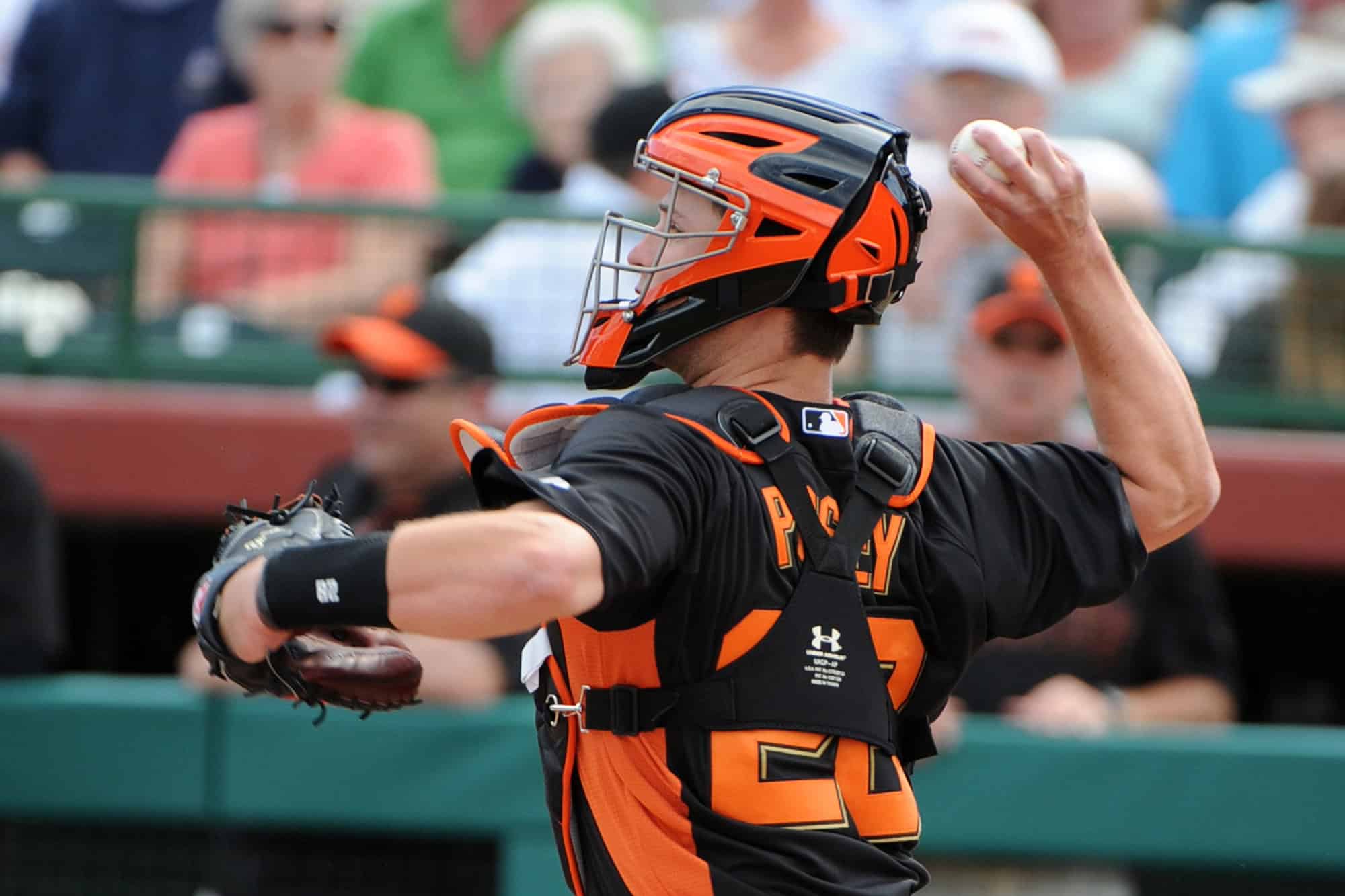
14. Buster Posey: The Modern Master
Buster Posey is the type of catcher that you wonder how he would match up in other eras. He really could do it all for the Giants during his admittedly short career. One Gold Glove Award in his career actually underrates him, as he led all catchers in throwing out would-be base stealers in his 2012 MVP season.
He also led the league in total zone-to-zone fielding runs above average in 2016. That was the same year that he led the league in double plays turned by a catcher.
| Buster Posey — Career | Total |
|---|---|
| G | 1371 |
| AB | 4970 |
| H | 1500 |
| HR | 158 |
| RBI | 729 |
| SB | 23 |
| AVG | .302 |
| OBP | .372 |
| SLG | .460 |
| OPS | .832 |
| MVP | 1 |
| All-Star selections | 7 |
| Gold Gloves | 1 |
| Silver Sluggers | 5 |
| World Series titles | 3 |
| Rookie of the Year | 1 |
13. Thurman Munson: The Captain
We stick with the shorter careers and go to a tragic one with Thurman Munson. When he played, he was one of the best catchers out there. His 1976 MVP season is better known for his offensive contributions than his defensive ones, but we must make sure that we recognize his defensive prowess that showed during his 11-year career.
He earned three Gold Gloves while leading the league in games caught, assists, and double plays turned in multiple seasons.
| Thurman Munson — Career | Total |
|---|---|
| G | 1423 |
| AB | 5344 |
| H | 1558 |
| HR | 113 |
| RBI | 701 |
| SB | 48 |
| AVG | .292 |
| OBP | .346 |
| SLG | .410 |
| OPS | .756 |
| MVP | 1 |
| All-Star selections | 7 |
| Gold Gloves | 3 |
| World Series titles | 2 |
| Rookie of the Year | 1 |
12. Tony Peña: The Innovator
Tony Peña just doesn't get enough credit for how good he was. He was a five-time All-Star with four Gold Gloves in his great 18-year career. That doesn't really cover how good he was behind the plate.
There were seven seasons in his career where he led the league in some kind of combination of games caught, putouts, assists, double plays turned, fielding percentage, total zone total fielding runs above average, range factor per game, and caught stealing. He really was that impressive defensively.
| Tony Peña Sr. — Career | Total |
|---|---|
| G | 1988 |
| AB | 6489 |
| H | 1687 |
| HR | 107 |
| RBI | 708 |
| SB | 80 |
| AVG | .260 |
| OBP | .309 |
| SLG | .364 |
| OPS | .673 |
| All-Star selections | 5 |
| Gold Gloves | 4 |
11. Jim Sundberg: The Gold Glove Machine
The reputation of Jim Sundberg will always include his unbelievable run as the Rangers' catcher for the first eight years of his career.
He won six straight Gold Gloves. He led the league in putouts for six straight seasons. He led the league in assists for six out of seven seasons. He led the league in fielding percentage for four straight seasons and six seasons overall in his career.
He was simply a star backstop in the game of baseball during his peak.
| Jim Sundberg — Career | Total |
|---|---|
| G | 1962 |
| AB | 6021 |
| H | 1493 |
| HR | 95 |
| RBI | 624 |
| SB | 20 |
| AVG | .248 |
| OBP | .327 |
| SLG | .348 |
| OPS | .675 |
| All-Star selections | 3 |
| Gold Gloves | 6 |
| World Series titles | 1 |
10. Bob Boone: The Durable Defender
Durability does garner a certain amount of respect in this great game. At the catcher position, it can be expanded upon because of the sheer wear and tear that doing the job can have on your body.
Bob Boone either has a body made of rubber, or he just played through the pain as he kept up his elite defensive catching ability throughout his 19-year career. The four-time All-Star earned seven Gold Gloves. Four of those Gold Gloves were earned from the ages of 38 to 41. That's not just durability. That's sustained excellence.
| Bob Boone — Career | Total |
|---|---|
| G | 2264 |
| AB | 7245 |
| H | 1838 |
| HR | 105 |
| RBI | 826 |
| SB | 38 |
| AVG | .254 |
| OBP | .315 |
| SLG | .346 |
| OPS | .661 |
| All-Star selections | 4 |
| Gold Gloves | 7 |
| World Series titles | 1 |
9. Gabby Hartnett: The Original Power Catcher (HOF)
Gabby Hartnett remains the gold standard in Wrigley for catchers. The actual Gold Glove Award wasn't a thing back when Hartnett was playing, and I bet that he wished it was. He is one of the greatest of all time at catching baserunners. He led the league in caught-stealing percentage an astonishing six times.
His percentage for his career is 56.1%. That means he caught 574 would-be base stealers and let only 449 successfully steal a base in his entire career.
| Gabby Hartnett — Career | Total |
|---|---|
| G | 1991 |
| AB | 6432 |
| H | 1912 |
| HR | 236 |
| RBI | 1179 |
| SB | 28 |
| AVG | .297 |
| OBP | .370 |
| SLG | .489 |
| OPS | .859 |
| MVP | 1 |
| All-Star selections | 6 |
8. Carlton Fisk: The Iron Man (HOF)
Here's a catcher who is on this list primarily because of his durability. He was a starting catcher throughout his impressive 24-year career. He made an All-Star team at the age of 43 when he was still primarily catching for 134 games in 1991.
Amazingly, that is more games played than when he was 24 in 1972 and won Rookie of the Year with a Gold Glove. He only played in 131 games that season.
| Carlton Fisk — Career | Total |
|---|---|
| G | 2499 |
| AB | 8756 |
| H | 2356 |
| HR | 376 |
| RBI | 1330 |
| SB | 128 |
| AVG | .269 |
| OBP | .341 |
| SLG | .457 |
| OPS | .798 |
| All-Star selections | 11 |
| Gold Gloves | 1 |
| Silver Sluggers | 3 |
| Rookie of the Year | 1 |
7. Bill Dickey: The Yankee Foundation (HOF)
Sometimes you just gotta be a great anchor to keep the ship from rocking too much. Bill Dickey did that for the great Yankees dynasty for 17 years. The range factor is an advanced statistical formula that just adds up putouts and assists and lets you divide it by nine to pretty much simulate the number of putouts and assists you can get per game.
Bill Dickey led the league in that advanced stat for six straight seasons. Those seasons were a part of his 11 All-Star selections in his career.
| Bill Dickey — Career | Total |
|---|---|
| G | 1789 |
| AB | 6300 |
| H | 1969 |
| HR | 202 |
| RBI | 1209 |
| SB | 36 |
| AVG | .313 |
| OBP | .382 |
| SLG | .486 |
| OPS | .868 |
| All-Star selections | 11 |
| World Series titles | 7 |
6. Yogi Berra: The Championship Receiver (HOF)
From Bill Dickey to the man he mentored, Yogi Berra wasn't just an anchor. You could say he was the whole ship. Yeah, I know there were other superstars on those amazing Yankees teams, but I would like to say that Yogi Berra guided them all to his record-setting 10 World Series championships.
He led the league in range factor per game for seven different seasons while also leading in double plays turned for six seasons. Just an amazing Hall of Famer who always found a way to win.
| Yogi Berra — Career | Total |
|---|---|
| G | 2120 |
| AB | 7555 |
| H | 2150 |
| HR | 358 |
| RBI | 1430 |
| SB | 30 |
| AVG | .285 |
| OBP | .348 |
| SLG | .482 |
| OPS | .830 |
| MVP | 3 |
| All-Star selections | 15 |
| World Series titles | 10 |
5. Roy Campanella: Brooklyn’s Complete Catcher (HOF)
Many will talk about the three MVP seasons that Roy Campanella played during his illustrious career. Those seasons have some great offensive numbers for the position.
However, it was his defense that truly shone brightly during his unfortunately short 10-year career. He led all catchers in range factor per game in nine out of ten seasons. That mostly highlights his glove. Then there was his arm. He led the league in caught stealing percentage for five straight seasons.
He finished with a 57.4% caught-stealing rate for his career. That is the highest in that category of all time.
| Roy Campanella — Career | Total |
|---|---|
| G | 1466 |
| AB | 5054 |
| H | 1428 |
| HR | 260 |
| RBI | 1015 |
| SB | 39 |
| AVG | .283 |
| OBP | .363 |
| SLG | .496 |
| OPS | .859 |
| MVP | 3 |
| All-Star selections | 8 |
| World Series titles | 1 |
4. Gary Carter: The Kid Behind the Plate (HOF)
Gary Carter was consistent with the glove throughout his 19-year Hall of Fame career. He led the league in putouts eight times while leading in assists five times.
Most of those seasons were in Montreal, where he was just an absolute anchor behind the plate. He won three Gold Gloves in consecutive seasons as an Expo, becoming a premier all-around catcher during his era.
| Gary Carter — Career | Total |
|---|---|
| G | 2296 |
| AB | 7971 |
| H | 2092 |
| HR | 324 |
| RBI | 1225 |
| SB | 39 |
| AVG | .262 |
| OBP | .335 |
| SLG | .439 |
| OPS | .774 |
| All-Star selections | 11 |
| Gold Gloves | 3 |
| Silver Sluggers | 5 |
| World Series titles | 1 |
3. Yadier Molina: The Modern Maestro
Dominant isn't exactly a word used to describe defensive catchers, but that's what Yadier Molina was. He won a Gold Glove nine times during his 10-time All-Star career.
The Platinum Glove debuted in 2011, right in the middle of Molina's career, to honor the best defensive player out of all positions. He won that award an impressive four times, showing how respected he was behind the plate.
| Yadier Molina — Career | Total |
|---|---|
| G | 2226 |
| AB | 7817 |
| H | 2168 |
| HR | 176 |
| RBI | 1022 |
| SB | 71 |
| AVG | .277 |
| OBP | .327 |
| SLG | .399 |
| OPS | .726 |
| All-Star selections | 10 |
| Gold Gloves | 9 |
| Silver Sluggers | 1 |
| World Series titles | 2 |
2. Iván Rodríguez: Pudge and the Power Arm (HOF)
The Hall of Famer Iván Rodríguez is undoubtedly deserving of being this high on this list. The 14-time All-Star won a whopping 13 Gold Gloves, more than any other catcher ever.
He led the league in caught-stealing percentage an amazing nine times. For over two decades, across 2,147 games (most games caught all-time), Rodriguez was the elite of the elite at the position.
| Ivan Rodriguez — Career | Total |
|---|---|
| G | 2543 |
| AB | 9592 |
| H | 2844 |
| HR | 311 |
| RBI | 1332 |
| SB | 127 |
| AVG | .296 |
| OBP | .334 |
| SLG | .464 |
| OPS | .798 |
| MVP | 1 |
| All-Star selections | 14 |
| Gold Gloves | 13 |
| Silver Sluggers | 7 |
| World Series titles | 1 |
1. Johnny Bench: The Gold Standard (HOF)
Johnny Bench wouldn't be considered the greatest catcher of all time if he wasn't considered a revolutionary defensive catcher. The 10-time Gold Glove Award winner changed the way catchers played the position forever with his one-handed technique.
In 2007, Rawlings and Major League Baseball set out to create an All-time Gold Glove Team. Out of all the great catchers in history and on this list, Bench was voted to represent them as an All-time Gold Glover.
| Johnny Bench — Career | Total |
|---|---|
| G | 2158 |
| AB | 7658 |
| H | 2048 |
| HR | 389 |
| RBI | 1376 |
| SB | 68 |
| AVG | .267 |
| OBP | .342 |
| SLG | .476 |
| OPS | .818 |
| MVP | 2 |
| All-Star selections | 14 |
| Gold Gloves | 10 |
| World Series titles | 2 |
| Rookie of the Year | 1 |
Final Thoughts
There aren't many lists where you'll be able to find this particular collection of athletes, but this one brought up some great names from the past that I hope you enjoyed.
Catchers will always be appreciated for how demanding the position is and how dedicated they are to making their team better.