

Last Updated: June 17th, 2026 by Michael Griffin
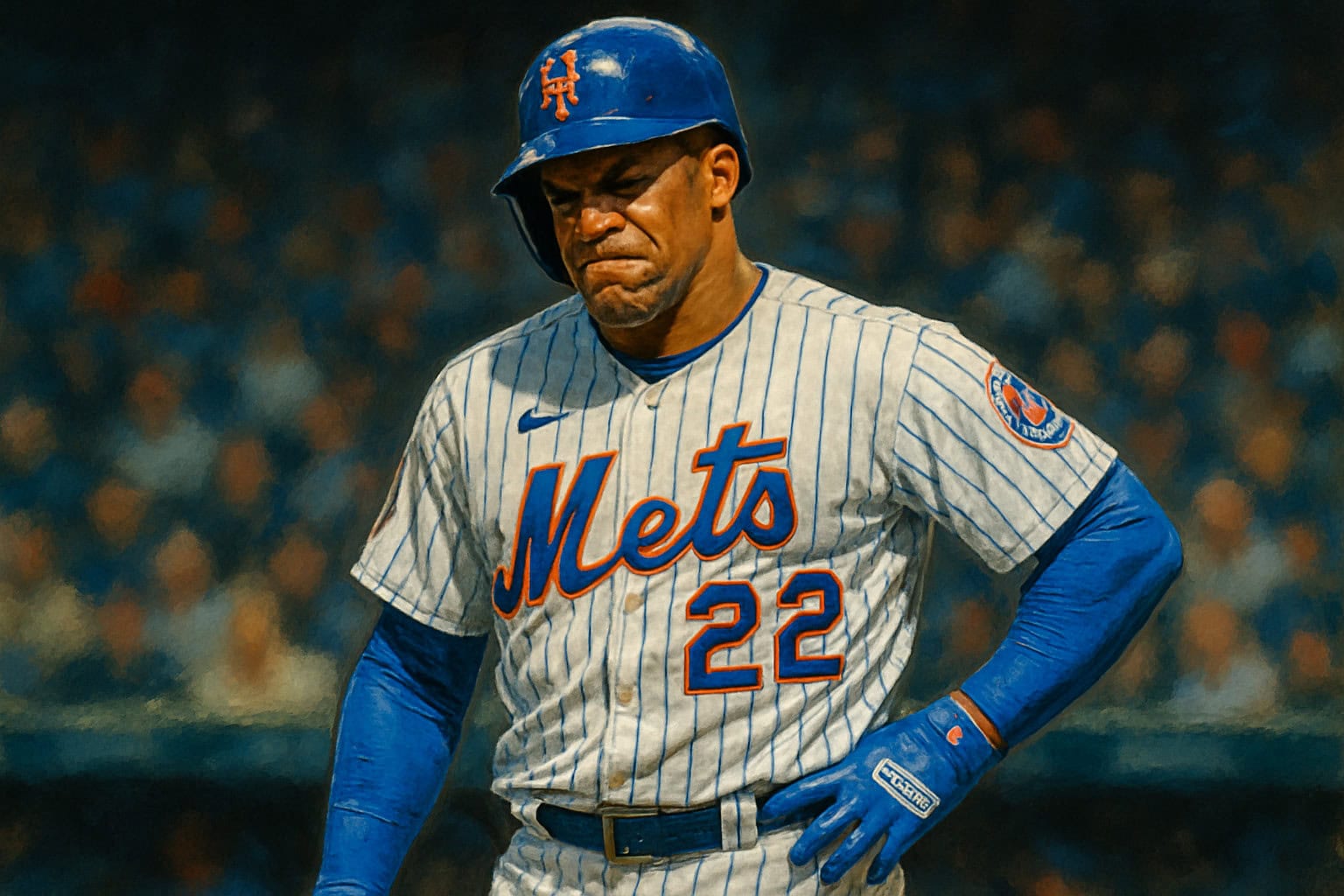
Juan Soto knew leaving the Yankees meant more than a change of scenery—it meant he’d no longer be hitting behind the mighty Aaron Judge. Now, as a Met, Soto is confronting the reality of life without Judge’s protection, and it’s a tale of longing, adjustment, and the psychological intricacies of baseball.
Don't lose this article. Enter your email below, and I'll send it to you right now. Plus, we'll send you other unbelievable stories from baseball's past.
Soto’s start with the Mets has been solid, yet not spectacular. His .250 batting average and .829 OPS as of April 16 are commendable but fall short of the blistering pace he set with the Yankees. He’s shown signs of coming around, homering in two consecutive games. As Soto himself notes, he’s being pitched differently. Without Judge, the reigning American League MVP, lurking in the on-deck circle, pitchers are more willing to challenge Soto, resulting in fewer strikes and more strategic maneuvers.

This isn’t just about numbers. It’s about the mental game—a game Soto admits is different without Number 99 affecting opposing pitchers’ mindsets. The psychological comfort of knowing a powerhouse slugger follows you can be as impactful as the stats themselves. Last season, Soto enjoyed more pitches in the strike zone, partly because pitchers dreaded the prospect of facing Judge next. Now, even with slugger Pete Alonso, who has been red-hot himself, batting behind him, Soto still feels the difference.
Sure, Alonso is having a remarkable season, boasting an OPS that rivals the best in the league. But as Soto and many others acknowledge, nobody intimidates pitchers like Judge, since there is always the specter of a monster home run. The psychological edge Judge provides—forcing pitchers into a dilemma of whom to challenge—can’t be quantified solely by stats. It’s a dynamic that alters pitchers’ strategies and, in turn, affects Soto’s performance.
The absence of Judge’s shadow might explain why Soto’s swing rate at in-zone pitches has dipped. He’s hesitant, perhaps overthinking his approach in the absence of the security Judge provided. This shift, subtle yet significant, underscores the mental challenges hitters face when lineup dynamics change.
It’s a reminder that baseball isn’t just about raw talent; it’s about the mind games, the strategic nuances that define the sport. Soto’s experience underscores how much a single player’s presence—or absence—can ripple through a lineup, impacting not just the order but the mentality of each hitter.
Soto’s comments have sparked debate. Some critics argue he’s making excuses, citing his hefty contract as a reason to adapt and thrive regardless of lineup changes. Yet, this perspective overlooks the human element of sports. The comfort of familiar dynamics is powerful, and adapting to new ones can be a complex process.
As the season progresses, Soto’s challenge will be to adjust his mindset and embrace the new dynamic with Alonso. The Mets’ lineup is formidable, even if it lacks Judge’s singular presence. Soto’s task is to harness his remarkable talent and find his groove. If he does, he’ll regain his status as one of baseball’s lethal offensive weapons.
Baseball is an intricate dance of skill and psychology, where perception often becomes reality. Soto’s journey with the Mets is a testament to this truth. His story highlights the delicate balance between the mind and performance, a balance every player must navigate.
In the end, Soto’s success won’t just be measured by his batting average or home run count. It will be defined by his ability to adapt to new challenges, to thrive in a lineup that, while different, is still elite. As he navigates these waters, Soto’s journey will offer insights into the heart of baseball—where the game is as much mental as it is physical.