

Last Updated: June 17th, 2026 by Michael Griffin
Baseball’s MVP award has always sparked heated debates in bars and around water coolers, spawning many blog posts and YouTube videos. But some choices were more questionable than others, leaving fans and statisticians scratching their heads for decades. Some seemed to reek of favoritism, while others were examples of the writers making rules for themselves. Let’s look at nine MVP awards that probably should have gone to someone else.
Don't lose this article. Enter your email below, and I'll send it to you right now. Plus, we'll send you other unbelievable stories from baseball's past.
Justin Morneau’s 2006 Heist from Derek Jeter

In one of the closest MVP races ever, Morneau edged out Jeter by just 14 points despite inferior numbers in nearly every category. The Yankees’ captain posted a .343 average, scored 118 runs, and played Gold Glove defense at shortstop while leading his team to the AL East title. Meanwhile, Morneau’s selection seemed to rest mainly on his 130 RBIs, which largely depended on having Joe Mauer hitting ahead of him. Jeter fans can point this out to any detractors who aimed to tarnish his legacy by saying he never won an MVP.
Juan Gonzalez’s Two-Point Robbery of A-Rod (1996)
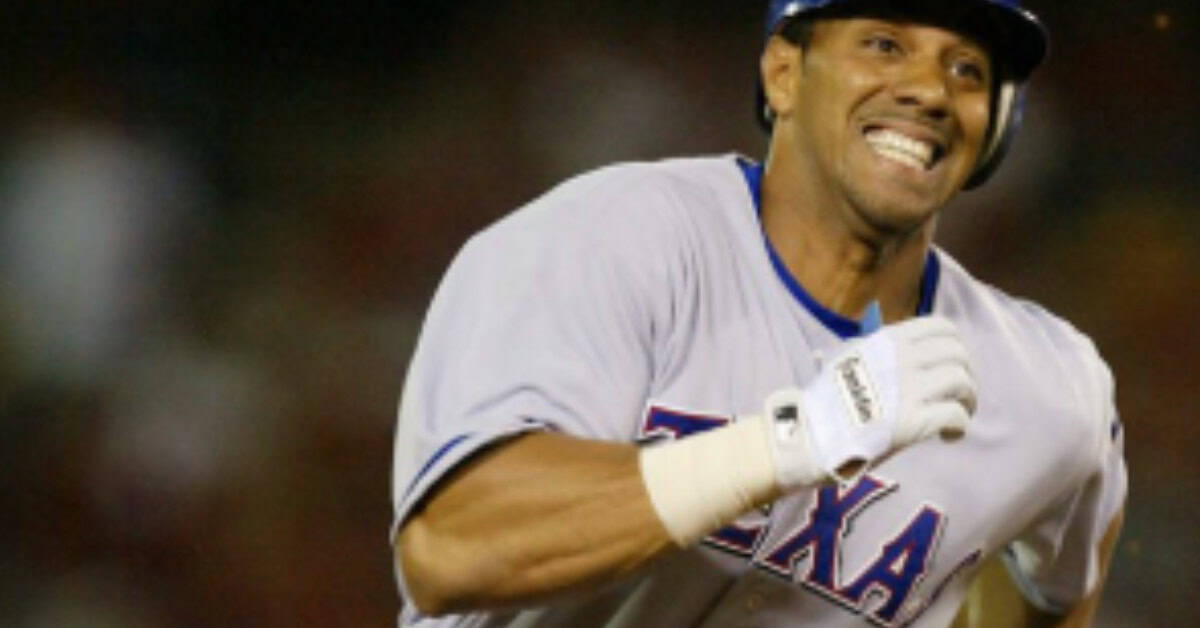
In what might be the biggest MVP travesty of the ’90s, Juan Gone beat out A-Rod by a mere two points despite Rodriguez putting up one of the greatest shortstop seasons ever. At just 20 years old, Rodriguez hit .358 with 36 homers and led the league with 141 runs scored while playing premium defense. Gonzalez’s selection seemed to hinge entirely on his 144 RBIs, while Rodriguez dominated in virtually every other aspect of the game.
Willie Stargell’s Controversial Co-MVP with Keith Hernandez (1979)

While Stargell was the emotional leader of the “We Are Family” Pirates, his numbers paled in comparison to Hernandez’s stellar season. The Cardinals’ first baseman led the league with a .344 average, 116 runs scored, and 48 doubles, while playing Gold Glove defense. Stargell’s selection seemed more about sentiment than statistics, as he appeared in just 126 games and hit .281.
DiMaggio Over .406: The Year Joe Beat Ted Williams (1941)
The most debated MVP race in baseball history saw DiMaggio’s 56-game hitting streak trump Williams’ .406 batting average – a mark that hasn’t been touched in over 80 years. Williams also led the league in home runs, runs scored, walks, and on-base percentage (.553!). While DiMaggio’s streak captured America’s imagination, Williams’ overall season was arguably the greatest hitting performance ever. Williams was also snubbed in 1947, with DiMaggio winning again.
Rocket Over Donnie Baseball: Clemens’ Disputed 1986 MVP

Don Mattingly’s stellar 1986 campaign (.352 average, 31 homers, 113 RBIs) was overshadowed by Clemens’ dominant pitching performance. While The Rocket’s 24-4 record and 2.48 ERA were impressive, many still question whether a pitcher who plays every fifth day should win MVP over an everyday player. Mattingly’s defensive excellence and consistent production made him the heart of the Yankees that season.
Ivan Rodriguez Over Pedro’s Historic Season (1999)

Pedro Martinez’s 1999 season was simply otherworldly – a 2.07 ERA during the height of the steroid era, with 313 strikeouts and a WHIP of 0.923. Rodriguez had a fine season (.332, 35 homers, 113 RBIs), but Martinez dominated in a way few pitchers ever have, especially considering the offensive environment. His starts were must-watch in Beantown. This vote seemed to reflect voters’ reluctance to give the MVP to a pitcher rather than true value, and it was due to two writers, George King and LaVelle E. Neal III, leaving him off their ballots completely. Boston fans are still grouchy to this day.
George Bell’s Questionable Victory Over Alan Trammell (1987)

While Bell put up impressive power numbers (47 homers, 134 RBIs), Trammell’s all-around excellence for the division-winning Tigers was more valuable. The Detroit shortstop hit .343 with 28 homers, 105 RBIs, and Gold Glove defense at a premium position. Bell’s defensive limitations and the Blue Jays’ second-place finish should have tipped the scales toward Trammell.
Andre Dawson’s MVP on a Last-Place Team (1987)

The Hawk’s 49 homers and 137 RBIs for the last-place Cubs earned him the MVP, but players like Ozzie Smith and Jack Clark had superior overall value for the division-winning Cardinals. Dawson’s selection marked the first time a player from a last-place team won the award, raising questions about the true meaning of “valuable” in Most Valuable Player. The Cubs did earn a great value, though, since ly gave them a blank contract, and they only paid him $500,000 base plus several $150,000 incentives, including his winning the MVP.
Dennis Eckersley: Another Reliever Takes the Crown (1992)

While Eckersley’s 51 saves were impressive, giving an MVP to a reliever who pitched just 80 innings remains controversial. Kirby Puckett (.329, 110 RBIs, Gold Glove defense) and Mark McGwire (42 homers, 104 RBIs) both had stronger cases for providing more value over a full season of play. Eck’s selection seemed to overvalue the save statistic while undervaluing everyday excellence.