Last Updated: August 28th, 2026 by Matthew Brown
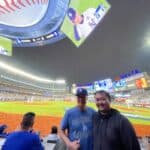
I recently visited Chicago for the first time, and Wrigley Field was definitely at the top of my list to try to catch a game. I am so glad I did. It was one of those regular games in the middle of July, and I'm very happy to have shared the experience with my dad, who had never been to Wrigley Field either.
Don't lose this article. Enter your email below, and I'll send it to you right now. Plus, we'll send you other unbelievable stories from baseball's past.
I can just tell that the culture surrounding baseball is different in Chicago. The feeling of togetherness, the feeling of community, and the energy in the stadium on a random afternoon showed me what baseball is all about. This list will have some of the greatest Cubs to have felt that energy. But the one qualification for every player on this list is that they are NOT in Cooperstown. Let's dive in.
#20 Jody Davis: The Folk Hero Behind the Plate
Wrigley was rocking in 1984, and I'm sure you can think of one player from that team who can't be on this list because he already has the ultimate recognition.
But Jody Davis is one of those forgotten cubs that had a big impact in that decade. Numbers are tough for a catcher, and Jody Davis is one of those catchers who had more value in handling a pitching staff.
#19 Dave Kingman: Kong’s Mammoth Blasts onto Waveland
"Kong" didn't have a long stint in Chicago, but it may have been the best stretch of his career. His only two All-Star selections were with the Cubs and his career-best 48 home run season was in Wrigley. I think if he had a little more time in the Windy City, he could have been more highly revered as a Cub.
#18 Bill Buckner: Before That One Play in Boston
Bill Buckner spent 22 years at the major league level, and it's hard to believe that he only got one All-Star selection. As many Chicago fans would agree, that selection was earned when he was a Cub in 1981. Buckner is just one of those first basemen who was reliable day in and day out.
He didn't hit a lot of home runs but led the league in doubles a couple of times. For me, doubles can bring a lot of value, and Buckner sure did that.
#17 Shawon Dunston: The Cannon-Armed Kid from Brooklyn
As I said, I only recently got to visit Wrigley for the first time. Shawon Dunston would have been one of those players that I wish I could have seen back in the day. He had the flair, the style, and the ability.
12 seasons with the Cubs, and a lot of them were as the everyday shortstop. You don't really see that much anymore. I'm glad he got his recognition with those two All-Star selections.
#16 Randy Hundley: The Catcher Who Revolutionized the Position
At first glance, Randy Hundley's numbers aren't exactly eye-popping. But when you think of it, being the everyday catcher and playing in 160 games in that one season in 1968 is incredible. The successes of Fergie Jenkins, Bill Hands, and their great closer Phil Regan were all thanks to the pitch-calling and game management of Randy Hundley.
#15 Alfonso Soriano: The Hop That Electrified Wrigley
I know Alfonso Soriano's complete stint with the Cubs wasn't what fans had imagined when he first signed that big contract. But Soriano still produced some electric seasons.
He hit .299 in his first year in Chicago, which is his second-best single-season mark. He also hit 20 or more home runs in every full year he spent at Wrigley. Yes, the expectations were high, but he was still one of the better Cubs of that era.
#14 Andy Pafko: Handy Andy of the Post-War Era
Andy Pafko was a young star for some Cubs teams that brought hope to the city of Chicago. They reached the World Series in 1945, and it seemed like he was the guy who could lead the team to a future championship, alongside the vets like Stan Hack and Phil Cavarretta.
Unfortunately, he was traded after four straight All-Star seasons. Certainly a "what-if" that warrants further investigation.
#13 Hank Sauer: The Mayor of Wrigley Field
Here's a Cub that could have teamed up well with Pafko. Hank Sauer came in right after Pafko left and started to take over offensively. He earned the 1952 NL MVP award, leading the league in home runs and RBIs, and went on to hit almost 200 home runs as a Cub. It's a wonder how he only got two All-Star nods in his tenure.
#12 Rick Monday: The Man Who Saved the American Flag
Many remember Monday for his heroics on the field, saving the American flag from being burned. Some will say that's the only thing they know of Monday. He has said before that he's okay with that.
But I would like to say he needs to be remembered for his on-field ability too. He hit over 100 home runs with the Cubs, more than he hit with the Dodgers or the A's, and he spent the least time in Chicago.
#11 Bill Madlock: The Mad Dog’s Batting Titles
Maybe the biggest "what-if" on this list: "Mad Dog" came out swinging with back-to-back batting titles in two of his only three years in Chicago. Even though he spent a minimal amount of time there, he certainly made memories. If he hadn't been traded, who knows what could have been for those Cubs teams in that era.
#10 Don Kessinger: The Shortstop Who Defined an Era
A model of consistency at one of the premium positions on the field, Don Kessinger locked down the shortstop spot for twelve years. He had five straight All-Star seasons, two Gold Gloves, and over 5,000 assists recorded as a Cub. It's hard to believe he became a Cardinal right after.
#9 Rick Sutcliffe: The Red Baron of the 1984 Dream
The "Red Baron" is one of those players that the Cubs were able to receive in a trade and prove them right. He won a Cy Young the year he got traded to Wrigley, having just pitched in 20 games. That's how strong his 16-1 record was in 1984. He received two more All-Star nods, should have won another Cy Young, and had a great career in Chicago.
#8 Derrek Lee: The Smooth First Baseman of 2005
Derek Lee was an underrated power hitter for his generation. Among all the stars who were mashing home runs and gaining big muscles with some not-so-secret help, Lee was able to hold his own, especially in Chicago. His 129 OPS+ makes him one of the most productive first basemen the Cubs have had.
#7 Carlos Zambrano: The Last Angry Pitcher at Wrigley
With all the pitchers that throw 100 miles per hour nowadays, it's hard to believe that it wasn't even close to the case when Carlos Zambrano was pitching in the 2000s.
However, the way that Zambrano looked and moved on the mound, you could have believed that he was whirling in fastballs in the triple digits. Oh, and let's not forget, he has three Silver Slugger awards, back when pitchers could mash too.
#6 Aramis Ramirez: The Clutch Corner Who Fixed Third Base
Now we get to the hot corner. A place that many Cubs fans will say belongs to the great Ron Santo, and they're right. But Aramis Ramirez was as good as any when he was the third baseman in his era.
His best years were easily in Chicago, as he hit over 200 home runs, had a .294 batting average, and over 1,200 hits. Somehow, he only garnered one Silver Slugger during that time.
#5 Stan Hack: The Greatest Cubs Third Baseman Before Santo
Here's the other great third baseman. "Smiling Stan" was a perennial .300 hitter in the leadoff spot. He gave those Cubs teams hope throughout his entire 16-year career. Coming up empty in four World Series appearances is tough, but I choose to remember that Hack set the standard for what a great third baseman should look like in Wrigley.
#4 Kerry Wood: Twenty Strikeouts and What Could Have Been
Kerry Wood was such an intriguing pitcher to watch, and he always had fans on the edge of their seats when he took them out. He may not have been able to match that incredible 20-K game, but he still racked up those strikeouts throughout his 12 years in Wrigley. He tallied almost 1,500 strikeouts as a Cub and should be remembered for his dominance.
#3 Rick Reuschel: Big Daddy’s Underrated Brilliance
Rick Reuschel is an underrated hurler in Cubs history. He racked up innings, tallied up wins, and always gave the Cubs a chance. It's a wonder he received only one All-Star selection in his 12 years in Chicago. A 114 career ERA+ is only one point below the great Fergie Jenkins' career mark.
#2 Mark Grace: The Pure Contact Hitter at Wrigley
In 2001, the Arizona Diamondbacks won the World Series with an older first baseman named Mark Grace. All of Chicago knew that he could be relied upon because he was able to do it every single day for 13 years as a three-time All-Star Cub. His totals are remarkable: 2,201 hits, 456 doubles, and 1,004 RBI in Chicago. Also, his four Gold Gloves proved he could hold down the fort.
#1 Sammy Sosa: The Slugger Who Changed Everything
Easily one of the greatest sluggers not to be enshrined in the Hall of Fame, Sammy Sosa defined a generation. Like it or not, he helped reinvigorate baseball in the 1990s and early 2000s. He had a style and a presence that many fans admired, including me at the time. I know our memories of him are mixed, but he earned this spot for making Wrigley must-see TV.
Final Thoughts
So many generations are represented in this list, and I hope you found at least one of your favorites here. They might not have earned Cooperstown's call, but they all have earned their spots on this list. Let us know some of your favorite Cubs that didn't make this list, and maybe we'll make another one of these.