
Last Updated: October 13th, 2026 by Shaiel Ben-Ephraim
Everyone remembers Game 6 of the 1986 World Series. Almost nobody talks about the other Game 6, played ten days earlier. It was the better game.
Don't lose this article. Enter your email below, and I'll send it to you right now. Plus, we'll send you other unbelievable stories from baseball's past.
And the Mets won it because they were scared.
Why Mike Scott Loomed Over Game 6
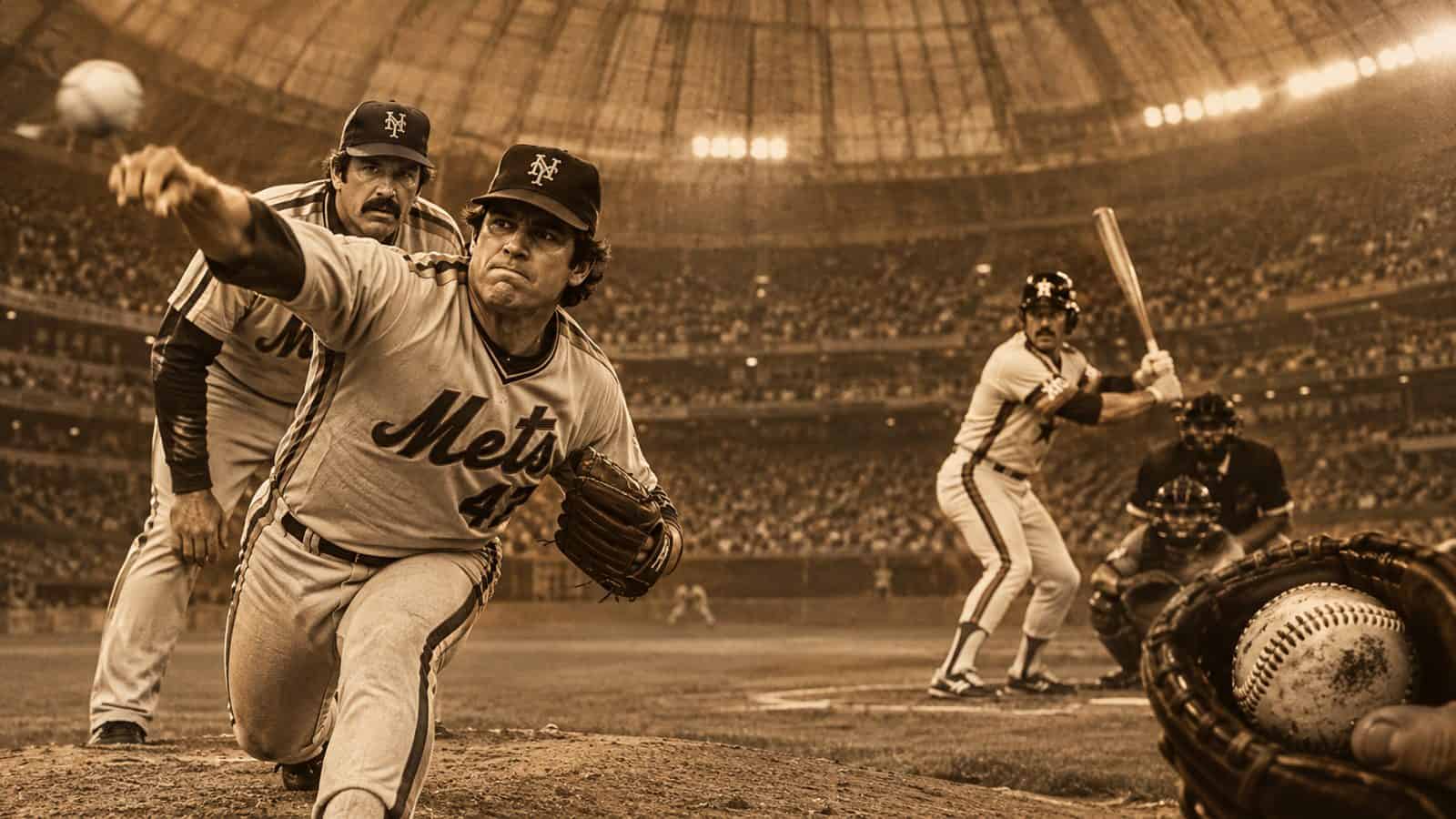
October 15, 1986. The Astrodome. The Mets led the NLCS three games to two.
A loss meant a Game 7, and a Game 7 meant Mike Scott.
Scott was close to unbeatable that year. He won the Cy Young. He clinched the NL West with a no-hitter against the Giants on September 25, the first time a pitcher had ever clinched a title that way.
In the NLCS, he beat the Mets twice, with two complete games and 19 strikeouts. His 14 strikeouts in Game 1 set an LCS record. He was named series MVP even though Houston lost.
No player on a losing team had ever won it before.
The Mets were convinced he was cheating. They didn't believe anyone could be that good, honestly. They collected baseballs he had thrown and held them up, looking for scuff marks.
Houston Leads Until the Ninth-Inning Rally
So Game 6 was must-win. And it started badly. Houston scored three in the first off Bob Ojeda.
Then Bob Knepper shut the Mets out for eight innings on two hits.
In the top of the ninth, Lenny Dykstra pinch-hit and led off with a triple. Mookie Wilson singled him home on a ball that glanced off Bill Doran's glove. Keith Hernandez doubled in Wilson.
Houston brought in closer Dave Smith, who walked the first two men he faced. Ray Knight hit a sacrifice fly. The game was tied 3-3.
Three runs in one inning, after eight innings of nothing.
McDowell and Hatcher Stretch It to Extras
Then nobody scored for four innings. Roger McDowell held Houston there. He pitched five innings of hitless relief and faced the minimum fifteen batters.
It was the longest outing of his career. No manager would ask that of a relief ace today.
In the 14th, the Mets pushed a run across against Aurelio López. In the bottom half, Billy Hatcher hit a Jesse Orosco pitch off the screen on the left-field foul pole. Tied again.
Hernandez, Orosco, and the Kevin Bass Strikeout
In the 16th, the Mets scored three. Houston answered with two and had the tying run on second and the winning run on first. Kevin Bass came up and worked a full count.
Hernandez had already gone to the mound and made it clear Orosco should not throw a fastball. Accounts of exactly what he said vary, but everyone agrees it sounded like a threat. Orosco threw six straight breaking balls.
Bass struck out on the last one. The Mets won 7-6 and took the pennant.
Orosco won three games in that series, a record for a reliever. The game ran 16 innings, the longest in postseason history up to that point.
A Cocky Team Playing Scared
That's what the game means. The 1986 Mets are remembered as the cockiest, most obnoxious team of their era. In this game they had no swagger at all.
They were playing to avoid one man. After the game, Gary Carter put it plainly: "Mike Scott was our incentive to win."
The postscript came in 2011. On MLB Network's 1986: A Postseason to Remember, Scott was asked about the scuffing. He said: "They can believe whatever they want to believe.
Every ball that hits the ground has something on it." It was the closest he ever came to admitting it.