Last Updated: August 20th, 2026 by Michael Schatz
Summers in Cincinnati have just felt different over the years. There have been so many different eras of Reds baseball. Some are better than others.
Don't lose this article. Enter your email below, and I'll send it to you right now. Plus, we'll send you other unbelievable stories from baseball's past.
But every year there seems to be at least one great star that makes every fan want to come to the ballpark to watch. Let's celebrate those stars in this list of the greatest Reds hitters of all time.
How We Made This List
Cincinnati has seen some great baseball. There are so many decades that we can cover for an all-time hitters list, but we only have so many spots to fill. We are taking everything into account, from wins above replacement to awards to longevity. We want some of the most memorable Reds to be represented here.
20. Adam Dunn
2001-2008
| Adam Dunn — Career | Total |
|---|---|
| G | 2001 |
| AB | 6883 |
| H | 1631 |
| HR | 462 |
| RBI | 1168 |
| SB | 63 |
| AVG | .237 |
| OBP | .364 |
| SLG | .490 |
| OPS | .854 |
| All-Star selections | 2 |
It has been said that there are three true outcomes for a hitter, and one of the greatest examples of that is Adam Dunn. When he stepped to the plate, you knew he would either strike out, walk, or send a towering drive out of the ballpark. Dunn enjoyed his best years in Cincinnati, and he really built his legacy with 270 home runs as a Red.
19. Brandon Phillips
2006-2016
| Brandon Phillips — Career | Total |
|---|---|
| G | 1902 |
| AB | 7378 |
| H | 2029 |
| HR | 211 |
| RBI | 951 |
| SB | 209 |
| AVG | .275 |
| OBP | .320 |
| SLG | .420 |
| OPS | .740 |
| All-Star selections | 3 |
| Gold Gloves | 4 |
| Silver Sluggers | 1 |
When you think of a second baseman, you don't really think of the word "flashy," but Brandon Phillips certainly brought some great highlights and personality to that position during his career with the Reds. He brought his dynamic play to Cincinnati and saw some great success: three All-Star selections and four Gold Gloves. Brandon Phillips showed that he could do it all.
18. Lee May
1965-1971
| Lee May — Career | Total |
|---|---|
| G | 2071 |
| AB | 7609 |
| H | 2031 |
| HR | 354 |
| RBI | 1244 |
| SB | 39 |
| AVG | .267 |
| OBP | .313 |
| SLG | .459 |
| OPS | .772 |
| All-Star selections | 3 |
Sure, Lee May may be overshadowed by another Red from that era who was his teammate before moving into his spot when he left. But May should not be forgotten. He earned two All-Star nods as a Red and had an impressive 123 OPS+ as one of the more reliable power bats in the lineup that was about to win some titles in the coming years.
17. Bid McPhee (HOF)
1890-1899
| Bid McPhee — Career | Total |
|---|---|
| G | 2135 |
| AB | 8291 |
| H | 2250 |
| HR | 53 |
| RBI | 1067 |
| SB | 568 |
| AVG | .271 |
| OBP | .355 |
| SLG | .372 |
| OPS | .727 |
I told you we'd cover all eras, and Bid McPhee earns his way onto this list as a pioneer of the game. Home runs weren't a specialty for anybody at that time, but a second baseman tallying 189 triples (when counting his American Association stats) is definitely high. Also, McPhee stole 568 bases (again, some under the American Association), staking his claim to being one of the fastest Reds in history.
16. Heinie Groh
1913-1921
| Heinie Groh — Career | Total |
|---|---|
| G | 1676 |
| AB | 6074 |
| H | 1774 |
| HR | 26 |
| RBI | 566 |
| SB | 180 |
| AVG | .292 |
| OBP | .373 |
| SLG | .384 |
| OPS | .757 |
| World Series titles | 2 |
He might be the best name on this list. He also might be one of the most underrated. He led those early Reds teams to two World Series championships and was a force offensively. His Reds career was elite. A 130 OPS+ is a Hall of Fame level. You almost wish he never went to New York for the back half of his career.
15. Sean Casey
1998-2005
| Sean Casey — Career | Total |
|---|---|
| G | 1405 |
| AB | 5066 |
| H | 1531 |
| HR | 130 |
| RBI | 735 |
| SB | 18 |
| AVG | .302 |
| OBP | .367 |
| SLG | .447 |
| OPS | .814 |
| All-Star selections | 3 |
There are many players from the early 2000s who will have stories about getting to first base and being chatted up by the friendliest first baseman in the league. That's just the reason why they call Sean Casey "The Mayor". He wasn't just friendly, though; he was a career .300 hitter and a cornerstone in the Reds' lineup during his time.
14. Eric Davis
1984-1996
| Eric Davis — Career | Total |
|---|---|
| G | 1626 |
| AB | 5321 |
| H | 1430 |
| HR | 282 |
| RBI | 934 |
| SB | 349 |
| AVG | .269 |
| OBP | .359 |
| SLG | .482 |
| OPS | .841 |
| All-Star selections | 2 |
| Gold Gloves | 3 |
| Silver Sluggers | 2 |
| World Series titles | 1 |
One of the most exciting outfielders of his day, Eric Davis, is certainly one I wish I could have seen in person. The talent was certainly there. He had both elite power and speed. I think we all wish he could have played more and not have to deal with those injuries throughout his career. The two-time All-Star still earns his way on this list.
13. Ken Griffey Sr.
1973-1990
| Ken Griffey Sr. — Career | Total |
|---|---|
| G | 2097 |
| AB | 7229 |
| H | 2143 |
| HR | 152 |
| RBI | 859 |
| SB | 200 |
| AVG | .296 |
| OBP | .359 |
| SLG | .431 |
| OPS | .790 |
| All-Star selections | 3 |
| World Series titles | 2 |
Before we get to "The Kid", let's talk about his dad. Ken Griffey Sr. arguably has more of an impact on Cincinnati with his 12 total Reds seasons. He was a part of those two World Series titles, and he contributed in a big way. He hit .303 with the Reds and gave them three All-Star seasons. This was certainly a legacy to live up to.
12. Vada Pinson
1958-1968
| Vada Pinson — Career | Total |
|---|---|
| G | 2470 |
| AB | 9645 |
| H | 2757 |
| HR | 256 |
| RBI | 1169 |
| SB | 305 |
| AVG | .286 |
| OBP | .327 |
| SLG | .442 |
| OPS | .769 |
| All-Star selections | 2 |
| Gold Gloves | 1 |
Pinson helped carry the Reds through the 60s before their dominant 70s. He led the league in hits twice and earned four All-Star nods back when they were doing two All-Star games a year. It's too bad he only had one postseason appearance, as he set this franchise up for great success in the future.
11. Ted Kluszewski
1947-1957
| Ted Kluszewski — Career | Total |
|---|---|
| G | 1718 |
| AB | 5929 |
| H | 1766 |
| HR | 279 |
| RBI | 1028 |
| SB | 20 |
| AVG | .298 |
| OBP | .353 |
| SLG | .498 |
| OPS | .851 |
| All-Star selections | 4 |
Kluszewski is actually one of the most prolific power hitters of his era, but he unfortunately gets forgotten among the bigger names. He earned four straight All-Star selections, and he led the league with his forty-nine home runs in 1954. Somehow, he didn't win the MVP that year because it was won by some kid named Willie Mays.
10. George Foster
1971-1981
| George Foster — Career | Total |
|---|---|
| G | 1977 |
| AB | 7023 |
| H | 1925 |
| HR | 348 |
| RBI | 1239 |
| SB | 51 |
| AVG | .274 |
| OBP | .338 |
| SLG | .480 |
| OPS | .818 |
| MVP | 1 |
| All-Star selections | 5 |
| Silver Sluggers | 1 |
| World Series titles | 2 |
For all the big names that you can think of in the Big Red Machine, Foster is not exactly the first one. But he was as important as any on those dominant Reds teams. He was the anchor of the offense, tasked with driving in the most runs. He was able to lead the league in RBI three straight times while also leading the league in home runs in two of those seasons.
9. Dave Concepcion
1970-1988
| Dave Concepcion — Career | Total |
|---|---|
| G | 2488 |
| AB | 8723 |
| H | 2326 |
| HR | 101 |
| RBI | 950 |
| SB | 321 |
| AVG | .267 |
| OBP | .322 |
| SLG | .357 |
| OPS | .679 |
| All-Star selections | 9 |
| Gold Gloves | 5 |
| Silver Sluggers | 2 |
| World Series titles | 2 |
With all that scoring, the Reds needed some steady defense up the middle, and they had it in Dave Concepcion. His five Gold Gloves and nine All-Star selections proved his value among the flashy offense the Reds had. His 19 years in Cincinnati are filled with accomplishments, and he is one of the better shortstops not to be enshrined in Cooperstown.
8. Edd Roush (HOF)
1916-1931
| Edd Roush — Career | Total |
|---|---|
| G | 1967 |
| AB | 7363 |
| H | 2376 |
| HR | 68 |
| RBI | 981 |
| SB | 268 |
| AVG | .323 |
| OBP | .369 |
| SLG | .446 |
| OPS | .815 |
| World Series titles | 1 |
Roush is an example of how hitters benefited from the change as baseball left the Deadball Era. He was already a .300 hitter before 1920, but after, he was even better. Roush ended his career hitting .323 over 18 years and tallied 2,376 hits. He's got his case to be considered the most prolific Reds center fielder.
7. Joey Votto
2007-2023
| Joey Votto — Career | Total |
|---|---|
| G | 2056 |
| AB | 7252 |
| H | 2135 |
| HR | 356 |
| RBI | 1144 |
| SB | 80 |
| AVG | .294 |
| OBP | .409 |
| SLG | .511 |
| OPS | .920 |
| MVP | 1 |
| All-Star selections | 6 |
| Gold Gloves | 1 |
There are levels to this game, and Joey Votto is a great example of it. Those with high skill at the plate will always find a way. Votto established most of his legacy by having the highest on-base percentage of his prime. However, as the game changed, he changed with it. A 37-year-old hitting 36 home runs puts him among some of the greatest sluggers of all time with that accomplishment.
6. Barry Larkin (HOF)
1986-2004
| Barry Larkin — Career | Total |
|---|---|
| G | 2180 |
| AB | 7937 |
| H | 2340 |
| HR | 198 |
| RBI | 960 |
| SB | 379 |
| AVG | .295 |
| OBP | .371 |
| SLG | .444 |
| OPS | .815 |
| MVP | 1 |
| All-Star selections | 12 |
| Gold Gloves | 3 |
| Silver Sluggers | 9 |
| World Series titles | 1 |
One of the more improbable World Series championship teams was led by one of the greatest shortstops of all time. No shortstop has won more Silver Sluggers than he has. Few Reds can compare to his career commitment to Cincinnati. For 19 years, Larkin was a name to be put at the top of the Reds' scorecard.
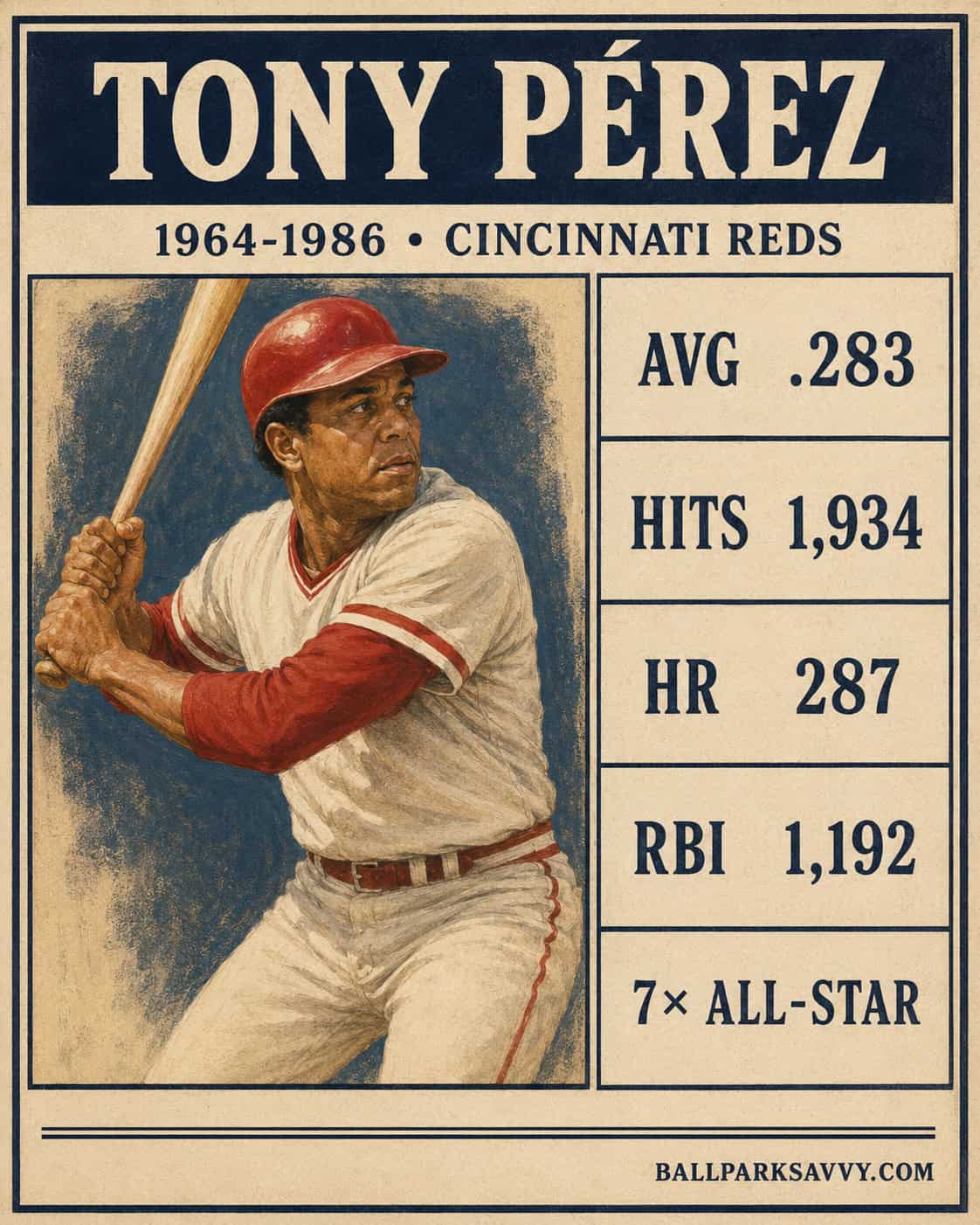
5. Tony Pérez (HOF)
1964-1986
| Tony Perez — Career | Total |
|---|---|
| G | 2777 |
| AB | 9778 |
| H | 2732 |
| HR | 379 |
| RBI | 1652 |
| SB | 49 |
| AVG | .279 |
| OBP | .341 |
| SLG | .463 |
| OPS | .804 |
| All-Star selections | 7 |
| World Series titles | 2 |
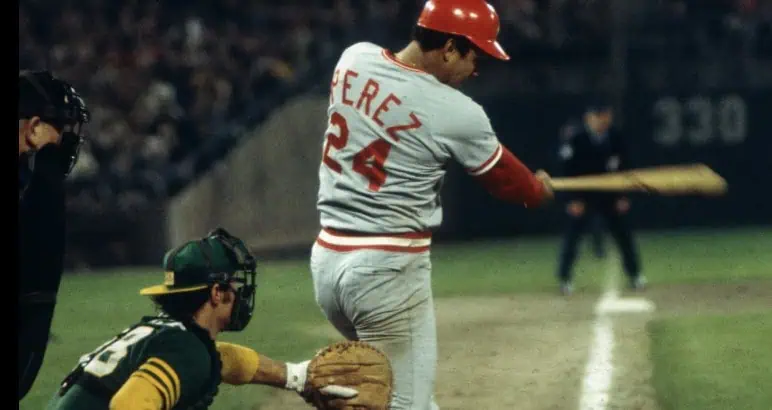
I think it gets forgotten that Tony Perez was actually the third baseman for the Reds in his first four All-Star seasons. But when the Big Red Machine was humming and winning championships, he was that cornerstone at first base. With three more All-Star selections to make it a total of seven and 287 home runs as a Red, Tony Perez earns his place high on this list.
4. Frank Robinson (HOF)
1956-1965
| Frank Robinson — Career | Total |
|---|---|
| G | 2808 |
| AB | 10006 |
| H | 2943 |
| HR | 586 |
| RBI | 1812 |
| SB | 204 |
| AVG | .294 |
| OBP | .389 |
| SLG | .537 |
| OPS | .926 |
| MVP | 2 |
| All-Star selections | 12 |
| Gold Gloves | 1 |
| World Series titles | 2 |
| Rookie of the Year | 1 |
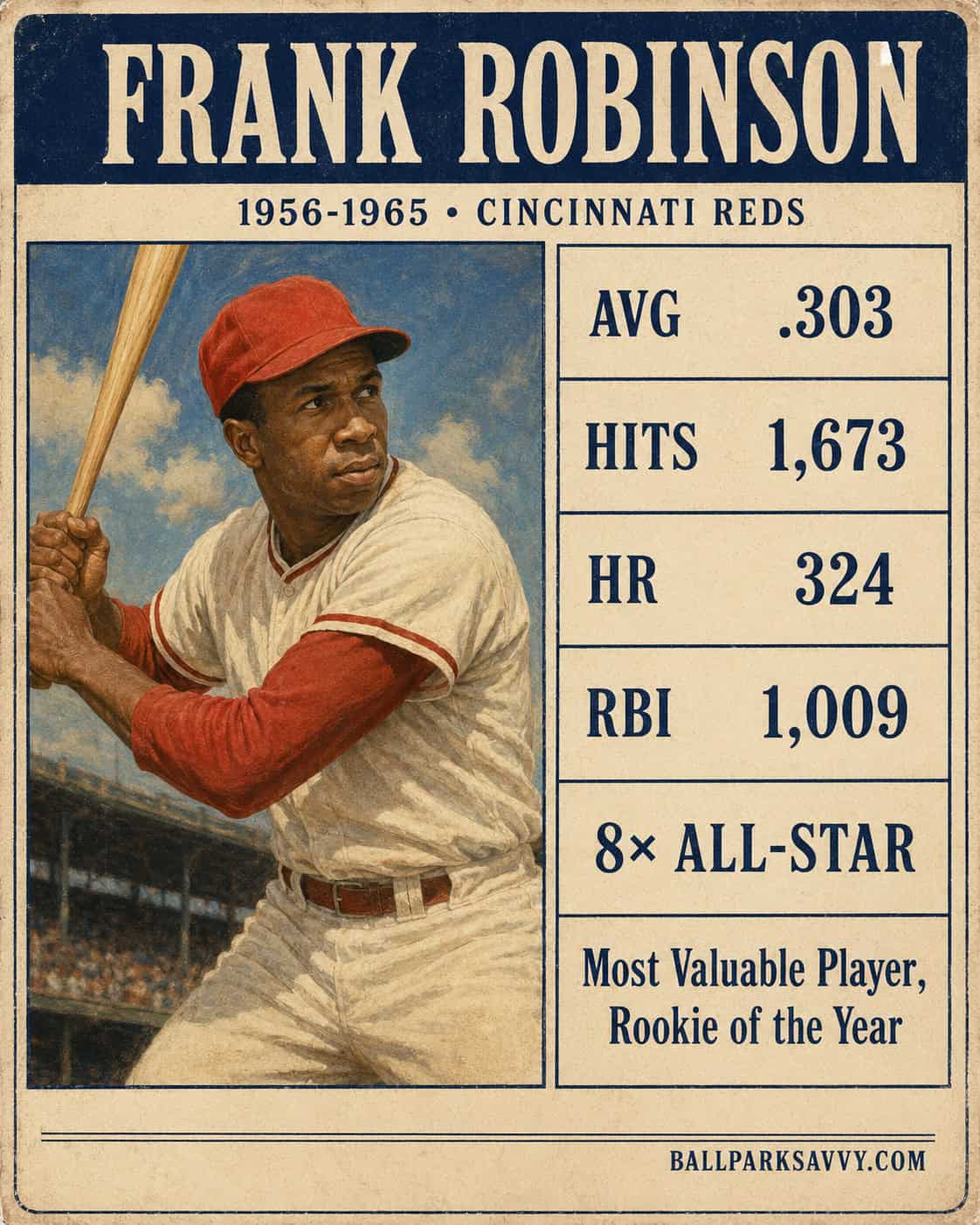
Not a lot of words have to be said about Frank Robinson. He could straight rake. There are five teams that can stake their claim to Frank over his 21-year career, but none saw as much production as the Reds. Robinson was able to hit .303 with 324 home runs and eight All-Star selections in Cincinnati. That was a major part of his illustrious Hall of Fame career.
3. Joe Morgan (HOF)
1972-1979
| Joe Morgan — Career | Total |
|---|---|
| G | 2649 |
| AB | 9277 |
| H | 2517 |
| HR | 268 |
| RBI | 1133 |
| SB | 689 |
| AVG | .271 |
| OBP | .392 |
| SLG | .427 |
| OPS | .819 |
| MVP | 2 |
| All-Star selections | 10 |
| Gold Gloves | 5 |
| Silver Sluggers | 1 |
| World Series titles | 2 |
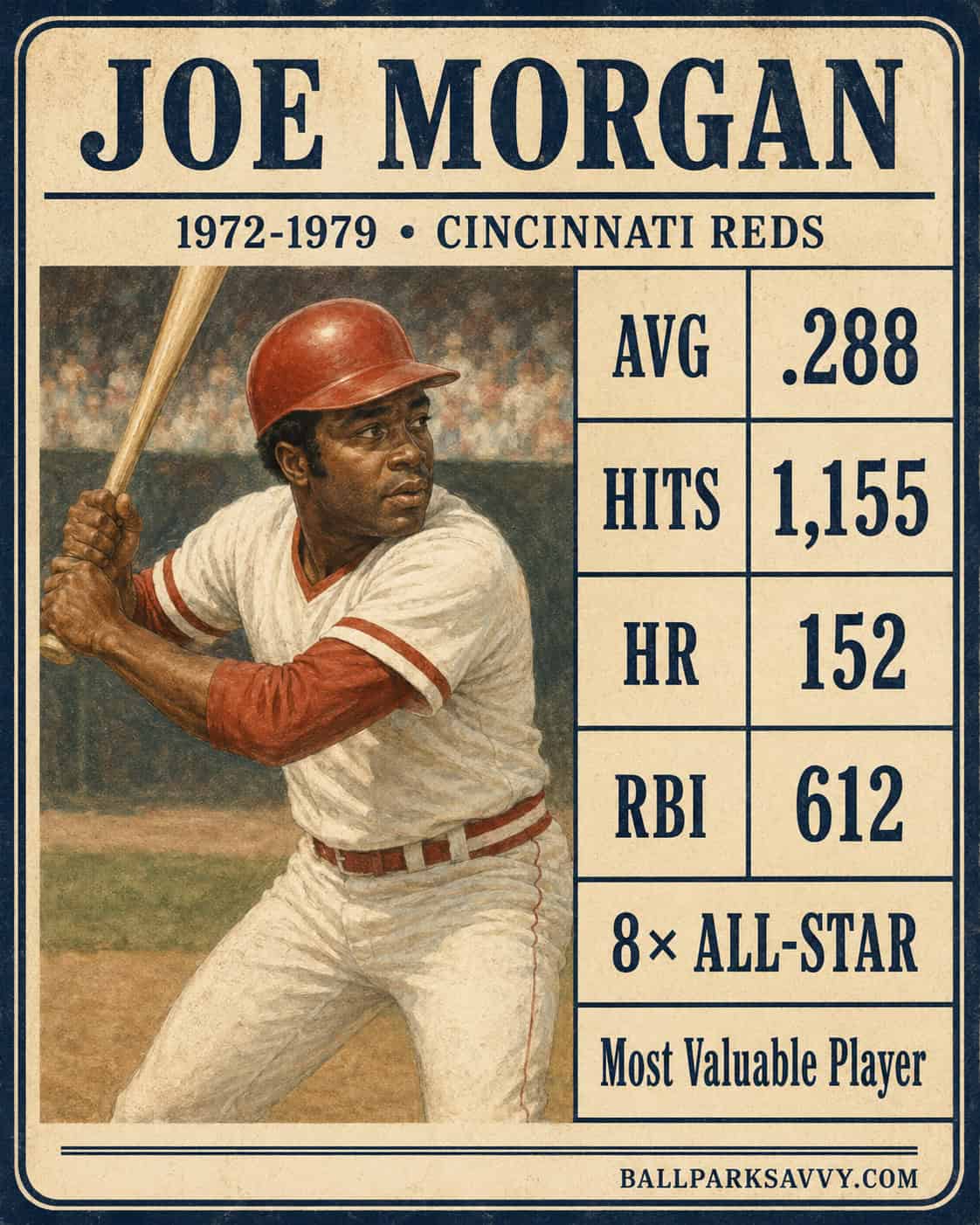
A change of scenery can be the best thing for a person's career. That's the case for Joe Morgan. A two-time All-Star and a fine player in Houston, Morgan blossomed when he came over to Cincinnati in 1972. He ended up winning two MVPs with eight straight All-Star selections as part of the Machine and held down that second base spot throughout his entire career.
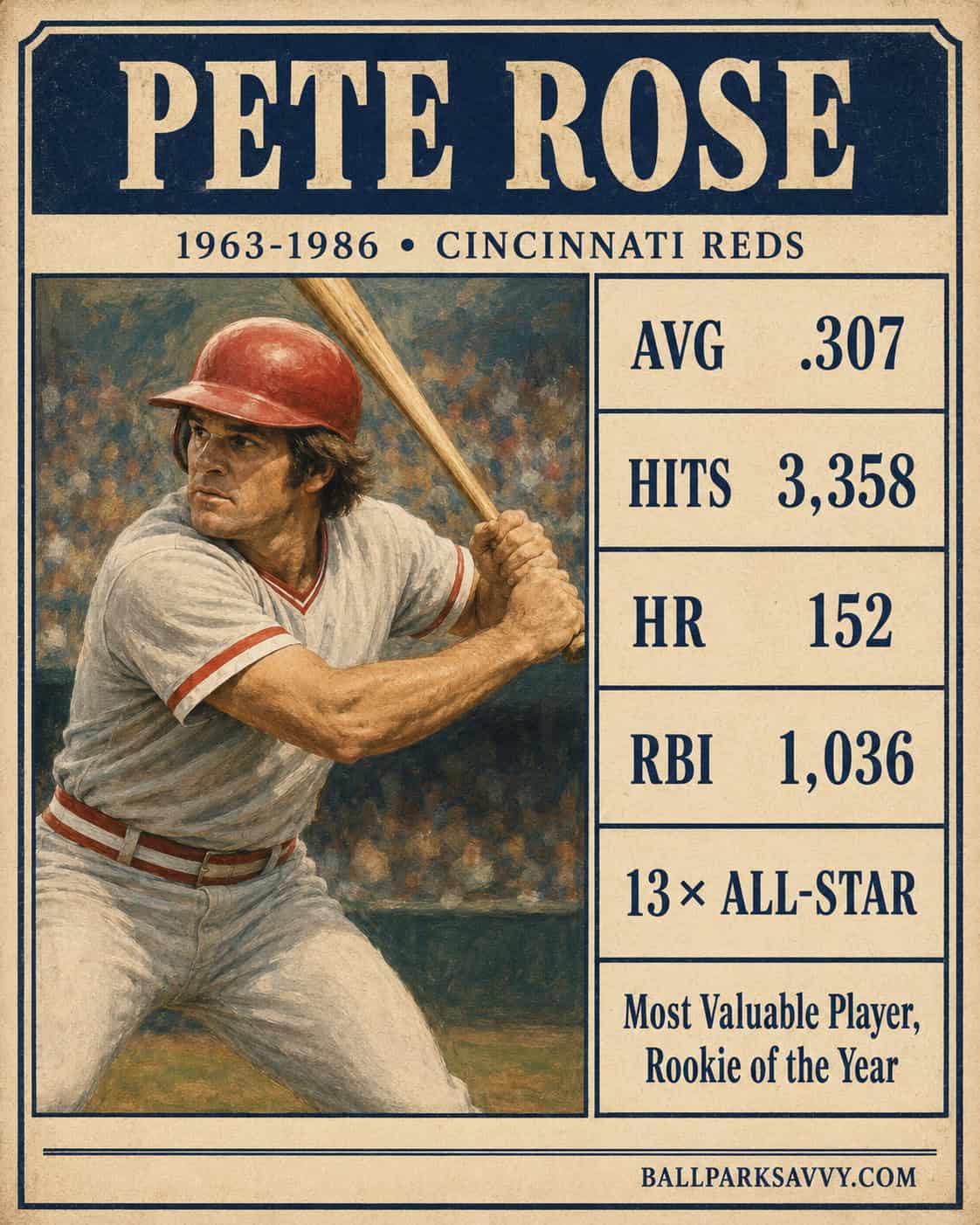
2. Pete Rose
1963-1986
| Pete Rose — Career | Total |
|---|---|
| G | 3562 |
| AB | 14053 |
| H | 4256 |
| HR | 160 |
| RBI | 1314 |
| SB | 198 |
| AVG | .303 |
| OBP | .375 |
| SLG | .409 |
| OPS | .784 |
| MVP | 1 |
| All-Star selections | 17 |
| Gold Gloves | 2 |
| Silver Sluggers | 1 |
| World Series titles | 3 |
| Rookie of the Year | 1 |
Like him or not, Pete Rose will always be a part of Cincinnati's baseball legacy. I'm sure you don't need me to tell you that no MLB player tallied more hits than he did. In fact, no MLB player tallied more games than Rose. He is woven into the fabric of baseball, and it's thanks to the consistency he displayed over his 24-year career. There is no Machine without him.
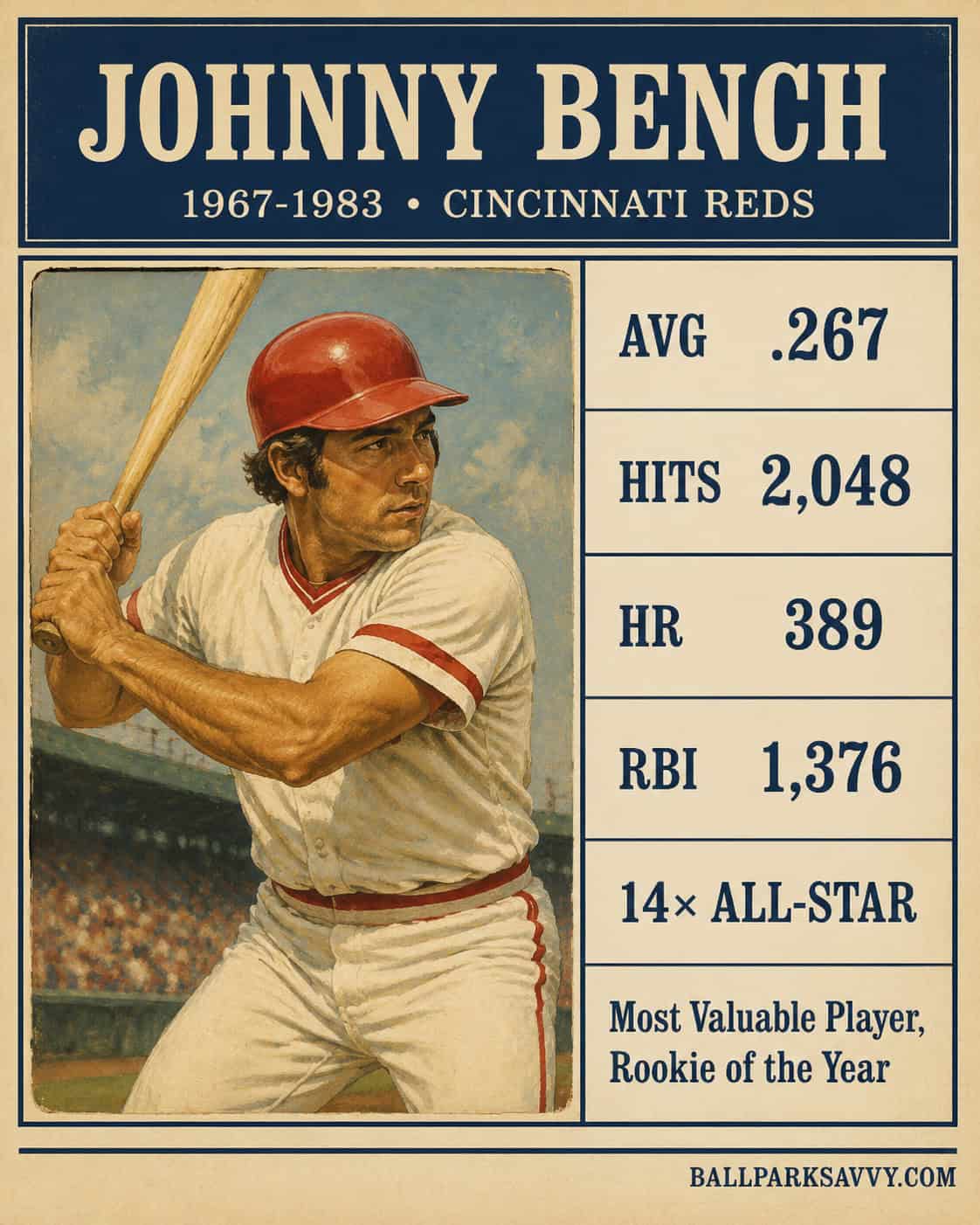
1. Johnny Bench (HOF)
1967-1983
| Johnny Bench — Career | Total |
|---|---|
| G | 2158 |
| AB | 7658 |
| H | 2048 |
| HR | 389 |
| RBI | 1376 |
| SB | 68 |
| AVG | .267 |
| OBP | .342 |
| SLG | .476 |
| OPS | .818 |
| MVP | 2 |
| All-Star selections | 14 |
| Gold Gloves | 10 |
| World Series titles | 2 |
| Rookie of the Year | 1 |
There's no need to go through the numbers, no need to go through the accolades, because it's no surprise that we find Johnny Bench at the top of this list. He didn't just define the catcher position throughout his 17 seasons, but he defined what it takes to be a Cincinnati Red. His toughness, his consistent greatness, and his class raised the game of baseball to heights that earned him a place at the top of many lists.
The Conclusion
I know this is mainly focused on one era of Reds baseball, but I hope you were able to enjoy the complete coverage of greatness that Cincinnati has seen over the years. Of course, you'll have some names that we left off on this list. But let us know who they are, and maybe we can come back to this a little later.